Top 10 moments from Albert Park as Melbourne celebrates 30 years of F1
We take a look back at 10 of the most memorable moments from three decades of racing in one of Formula 1’s best-loved cities.
This year Melbourne is celebrating 30 years as the host city of Formula 1’s Australian Grand Prix. There have been plenty of dramatic moments at Albert Park across the past three decades, with surprise winners, standout performers, and tons of thrills and spills. To mark the anniversary, we’ve picked out 10 of the most memorable moments from three decades of racing at one of Formula 1’s best-loved cities…
1996 – Starting with a bang
Adelaide had been a popular season-closer for Formula 1 for a decade when the race switched to Melbourne for the opening race in 1996, but any concerns about the new event were soon quashed.
Melbourne immediately worked its way into the hearts of those in the paddock and the Albert Park circuit proved to be a hit with drivers and fans as debutant Jacques Villeneuve scored pole position for Williams.
Villeneuve led away, but it took just three corners for Melbourne to provide a heart stopping moment when Martin Brundle suffered a sizeable accident. As the field bunched into Turn 3 Brundle was launched into a barrel roll which snapped his Jordan car in two, and prompted the race to be halted.
Fortunately Brundle was uninjured and took the restart in the spare car, though he later spun off. Villeneuve strived to take what would have been a stunning debut victory but an oil leak slowed his car and instead it was team mate Damon Hill who went down in the history books as Melbourne’s first winner.
1998 – Made up for Mika
McLaren ended a three-season win drought at the 1997 opener in Melbourne, and 12 months later they were the team to beat under revised aerodynamic regulations.
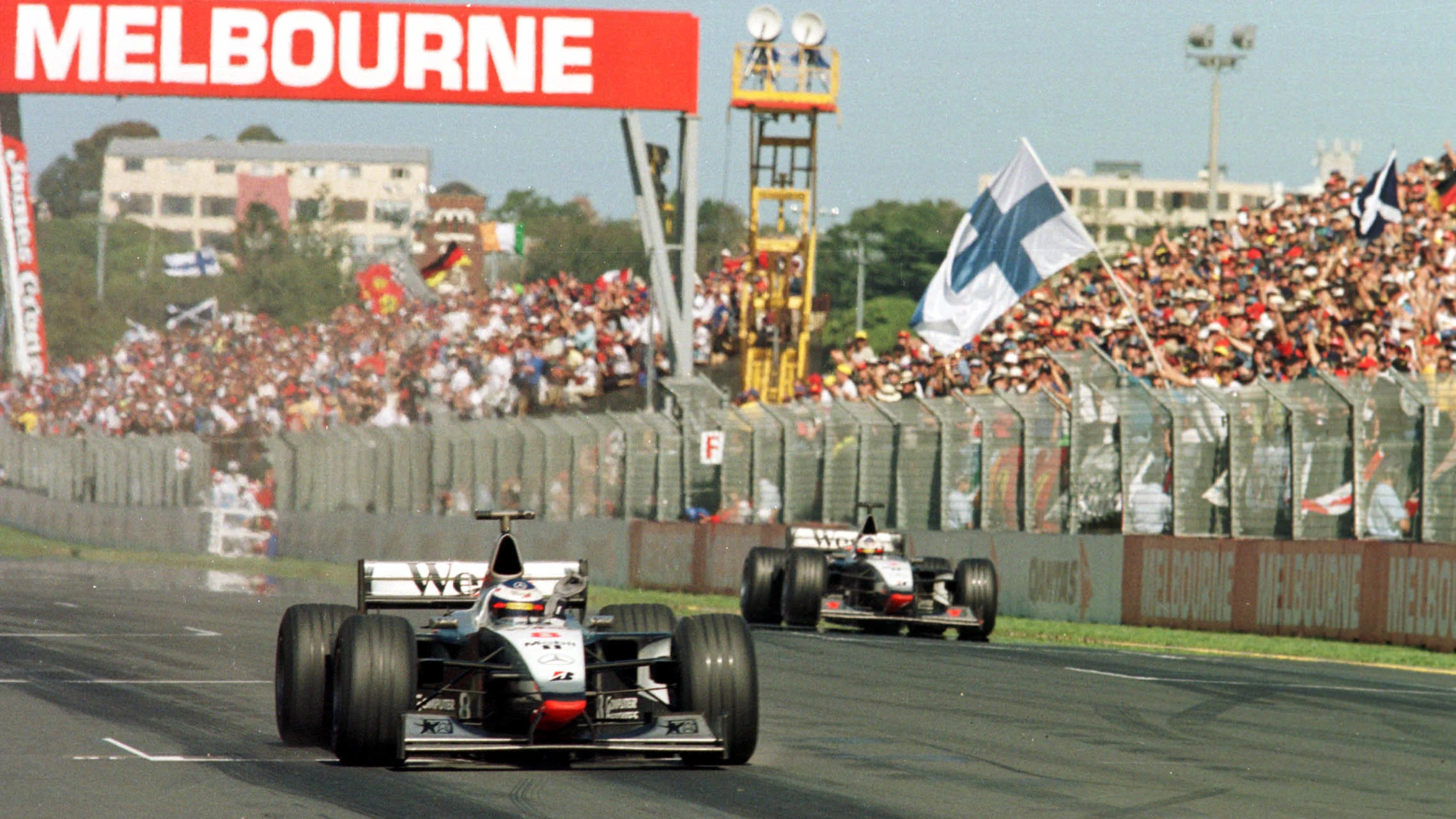
Mika Hakkinen led David Coulthard but a miscommunication meant he unexpectedly came into the pit lane, and thus relinquished the track advantage to the sister car.
Coulthard held a healthy lead but in the closing laps backed off to allow Hakkinen to reclaim the advantage, stating afterwards that he was honouring a pre-race agreement that whoever led into the first corner would take the victory.
Such was McLaren’s advantage that only Hakkinen and Coulthard finished on the lead lap, kick-starting a campaign in which Hakkinen and McLaren took home the respective titles.
2002 – Start chaos and Webber's home heroics
Melbourne’s first corner has often been a magnet for incidents and that was never truer than in 2002.
A fast-starting Ralf Schumacher challenged Rubens Barrichello but the two came together, with Schumacher’s Williams launched skywards after striking the rear of the Ferrari. Both were eliminated while, as drivers behind reacted to the incident, a second melee unfolded that accounted for another six drivers, as debris and smoke filled the air.
Miraculously no-one was hurt amid the drama, which was surprisingly cleared under the Safety Car rather than a full race stoppage.
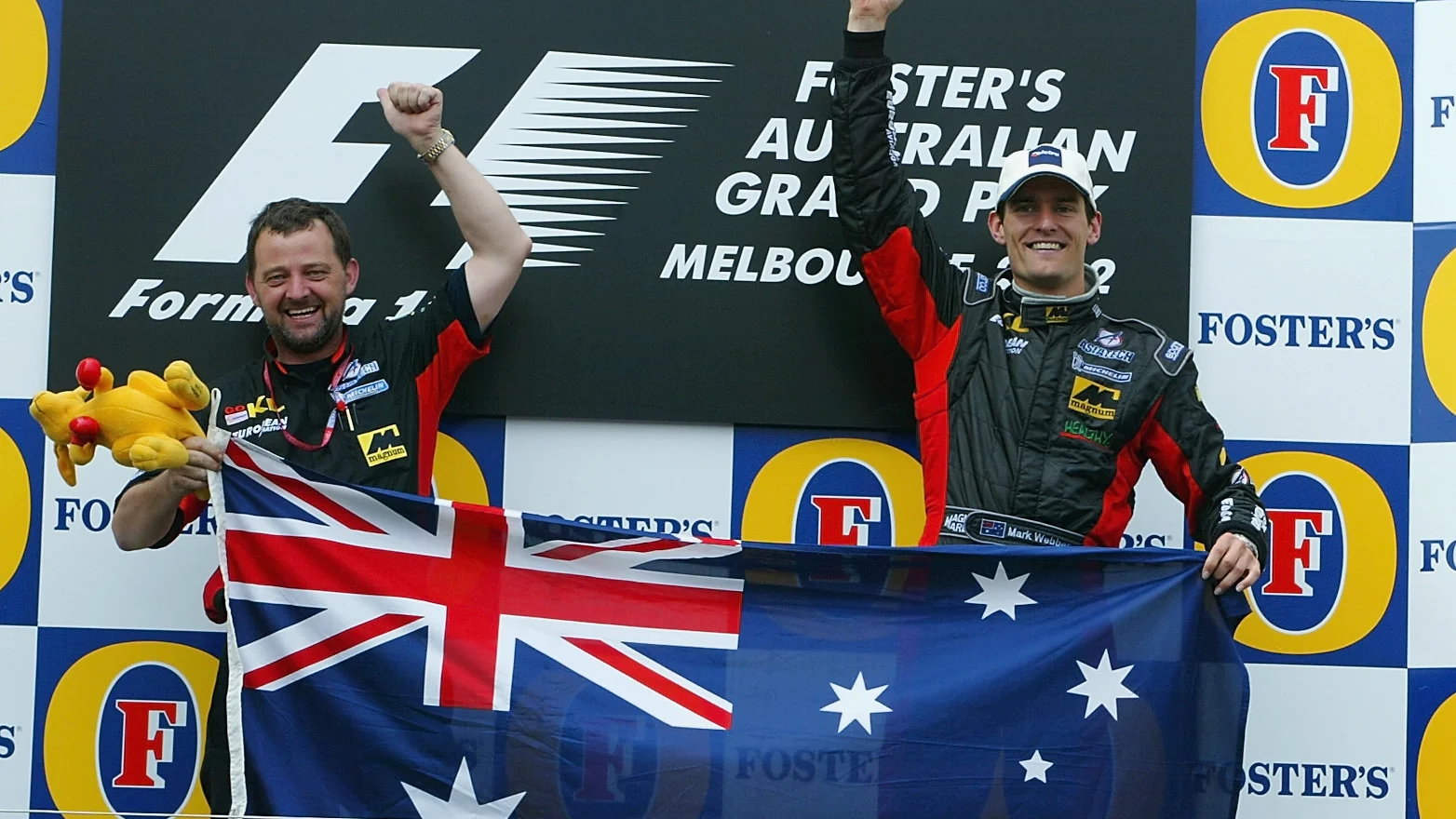
Michael Schumacher went on to triumph, while the high rate of attrition helped debutant Mark Webber in scoring an improbable fifth position for underdogs Minardi at his home race. Webber and team owner Paul Stoddart celebrated afterwards in front of the jubilant crowd, even holding their own unofficial ceremony on the podium!
2003 – DC’s last win
Formula 1’s 2003 campaign began with a Melbourne classic. It looked set to be a repeat of the previous season’s Ferrari domination but Michael Schumacher’s car was hobbled by an errant barge board while Rubens Barrichello crashed out in the race’s damp early laps.
Both Kimi Raikkonen and Juan Pablo Montoya were in commanding positions at various stages during the race, but Raikkonen was sanctioned for speeding in the pit lane, while Montoya made a mistake through Turn 1 and spun his Williams.
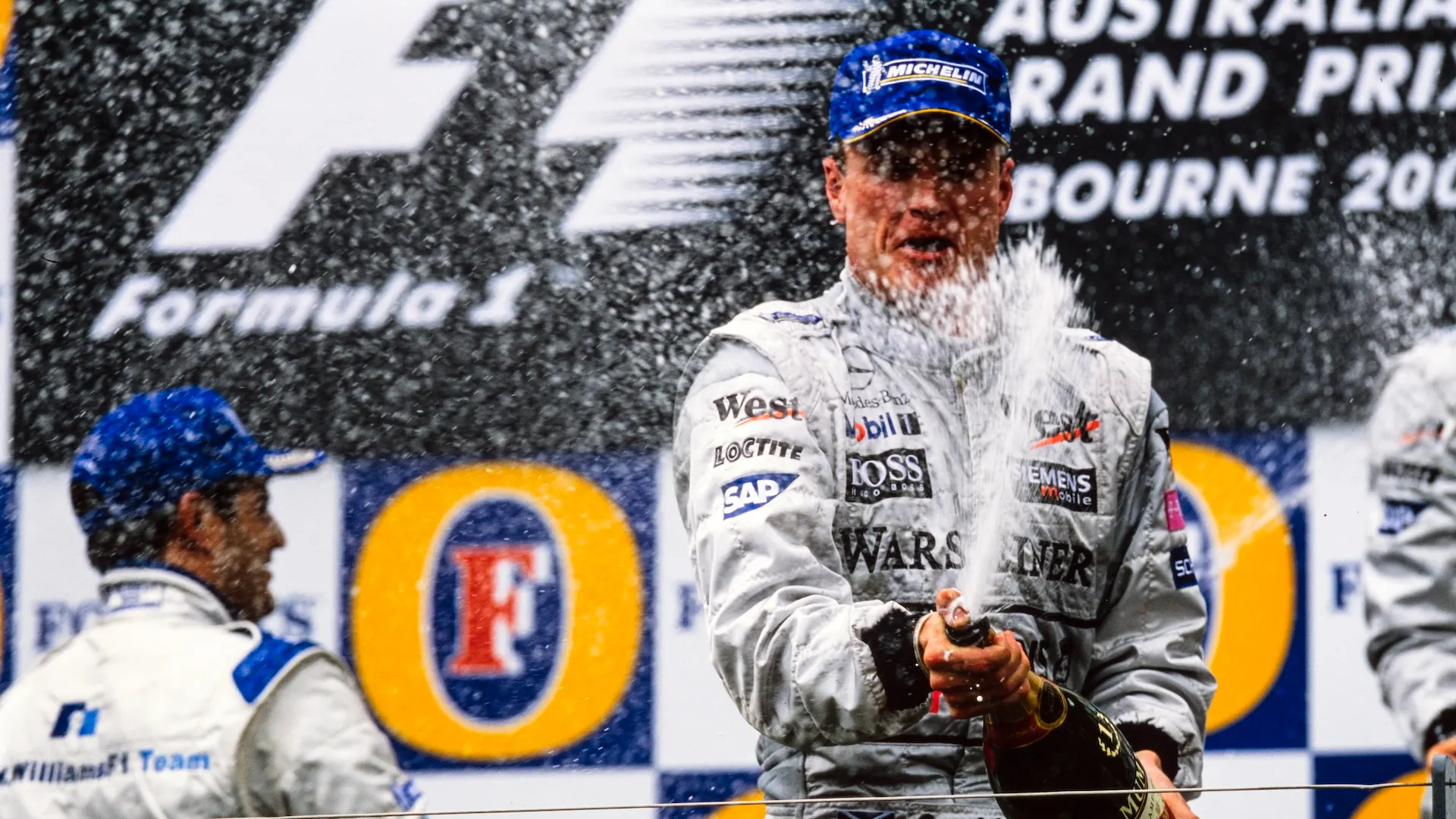
That error gifted the lead to Raikkonen’s McLaren team mate David Coulthard, who had an untroubled low-key run from an unheralded 11th on the grid, picking up the pieces as others fell by the wayside.
It proved to be the 13th and final victory of Coulthard’s Grand Prix career.
2008 – Just six make the flag
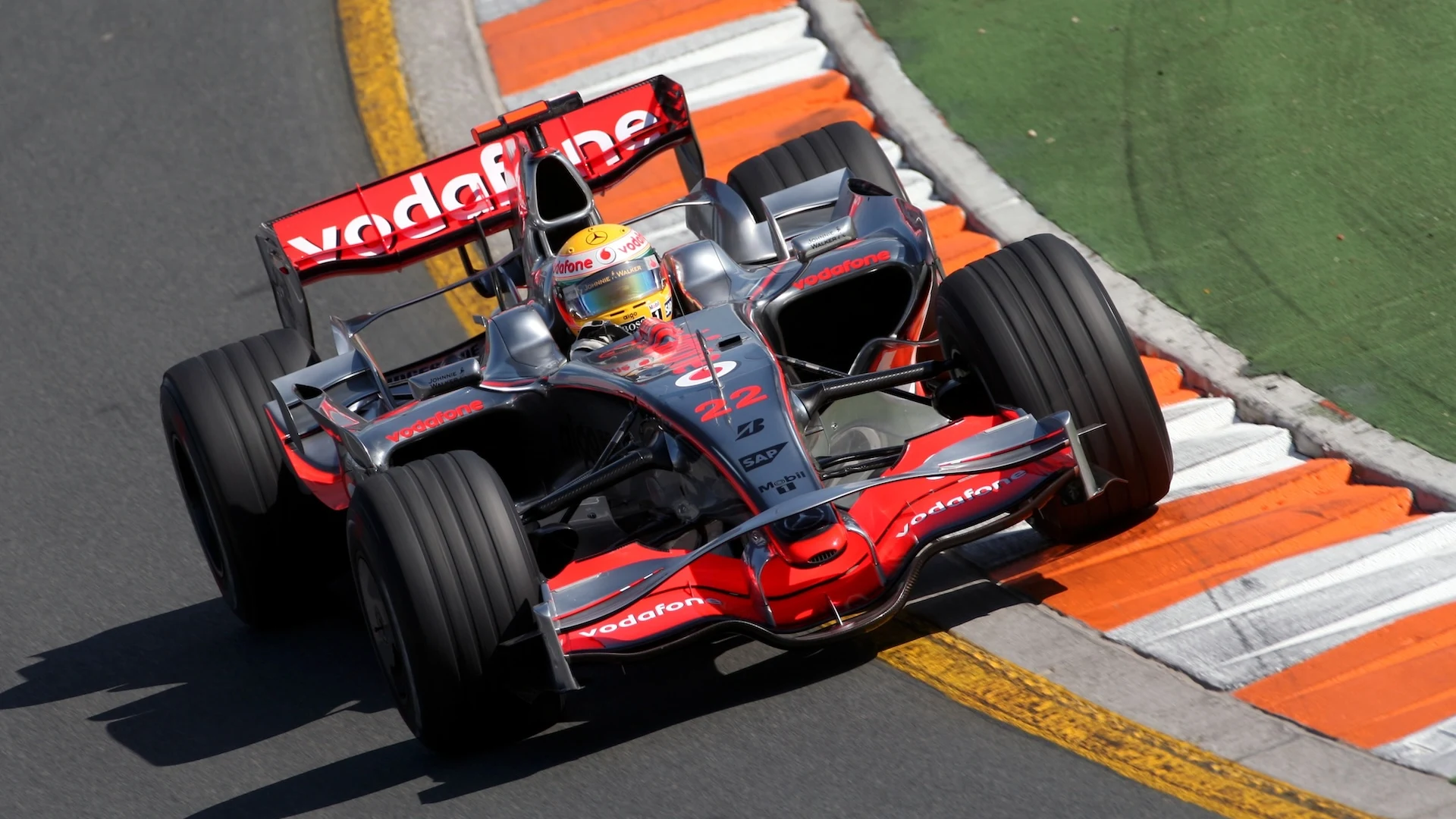
Lewis Hamilton began the 2008 season in serene style, converting pole position into victory on a sunny afternoon in Melbourne.
But behind him there was plenty of action and carnage. Five drivers were eliminated in opening lap clashes, the Ferrari drivers suffered a nightmare day before respective engine failures, while Timo Glock endured a spectacular airborne accident after bouncing heavily across the run-off through Turn 10.
Champ Car convert Sebastien Bourdais looked poised for fourth on debut until a heartbreaking late engine failure – one of several drivers to encounter technical issues – while late on Rubens Barrichello was excluded for a pit lane infraction.
That left just six drivers circulating when the chequered flag came out after 58 laps.
2009 – Re-Brawn Down Under
The demise of Honda and its rebirth under Ross Brawn’s leadership was one of the key stories of the 2008/09 off-season, and when the nascent BGP001 set stunning times in testing there was a one question on everybody’s lips in the paddock: is this pace real?
Melbourne was the acid test and as it turned out, yes, the pace was very, very real. Jenson Button fronted Rubens Barrichello for an all-Brawn front-row lockout, and controlled the Grand Prix.
There were still bags of nerves – after all, Brawn had been through so much during the winter – but Button was at ease up front as he delivered a fairytale victory for a beleaguered crew that was still living hand-to-mouth.
Barrichello had a far more convoluted afternoon with a slow start and first-lap contact, but a late crash between Robert Kubica and Sebastian Vettel elevated the Brazilian back into second, giving the squad a scarcely believable 1-2 in their first ever race.
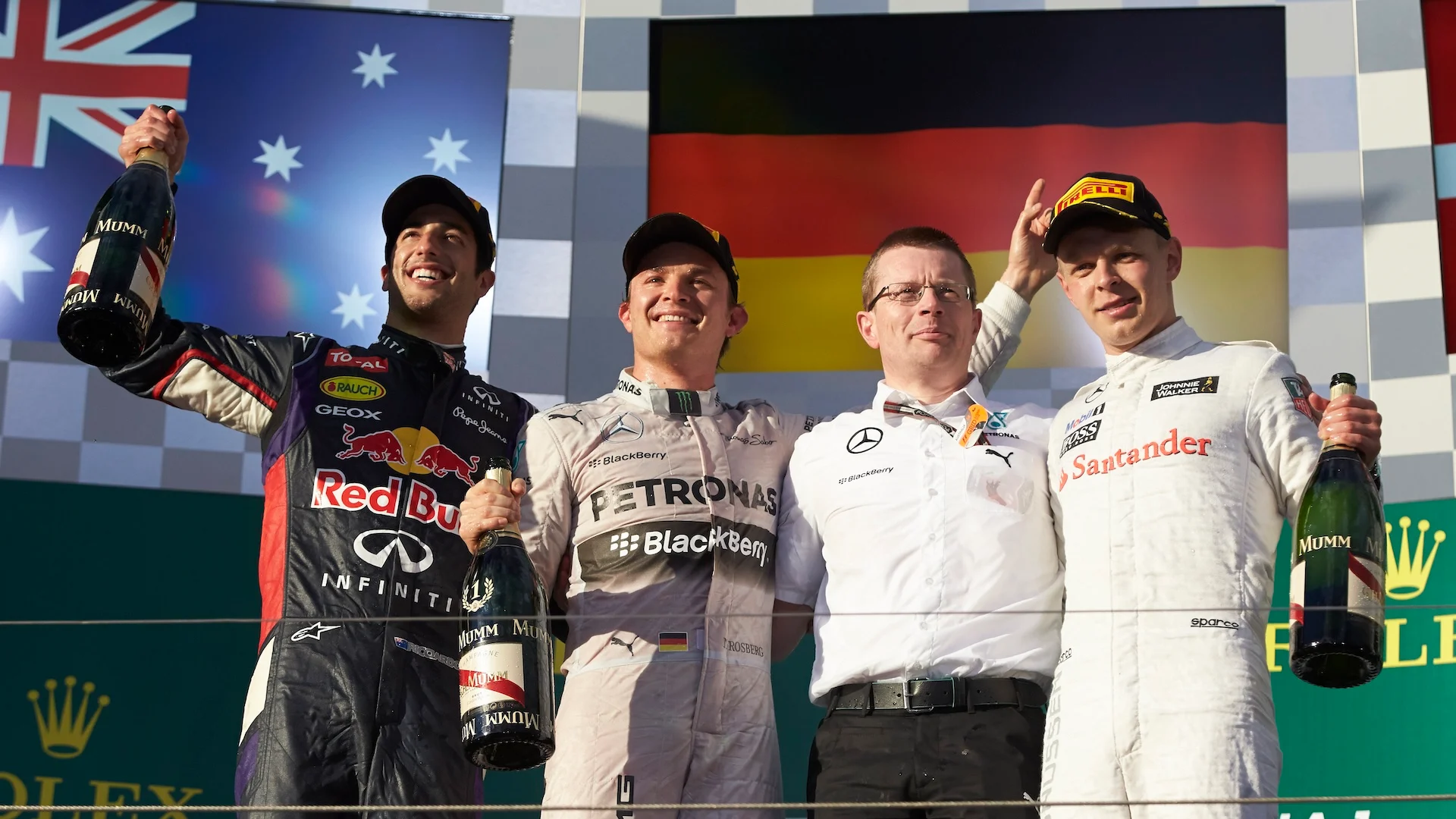
2014 – Daniel denied
Formula 1 headed into the unknown in 2014 with revised engine regulations, and while pre-event fears of mass unreliability went unrealised, there were still glitches and early exits for Lewis Hamilton and Sebastian Vettel.
Nico Rosberg dominated the race for Mercedes, but behind him there was a rapturous reception for home hero Daniel Ricciardo, and plaudits for McLaren’s debutant Kevin Magnussen, making it a very happy podium ceremony.
But Ricciardo’s delight was short-lived as his Red Bull car failed post-race checks over the new fuel flow rate measurement. Ricciardo and the Australian crowed nonetheless have the memories of their moment, even if the trophy ended up heading elsewhere.
2016 – Alonso escapes enormous accident
It will come as little surprise that Fernando Alonso has started more Grands Prix in Melbourne than any other driver, having been on the grid only five years into the city’s life as a Formula 1 host.
Alonso has had his fair share of ups and downs at Albert Park, but none have been quite as dramatic as his start to the 2016 campaign.
The Spaniard, by then in his second spell at McLaren, was battling Haas’ Esteban Gutierrez on the run to Turn 3, but clipped the rear of the car on the approach to the corner and was sent into a terrifying high-speed roll across the gravel.
Alonso’s car landed upside down in a crumpled mess adjacent to the barriers, but remarkably he was able to extricate himself from the wreckage. Unsurprisingly the race was halted, and Alonso missed the next race as a precaution.
2023 – A trio of stoppages
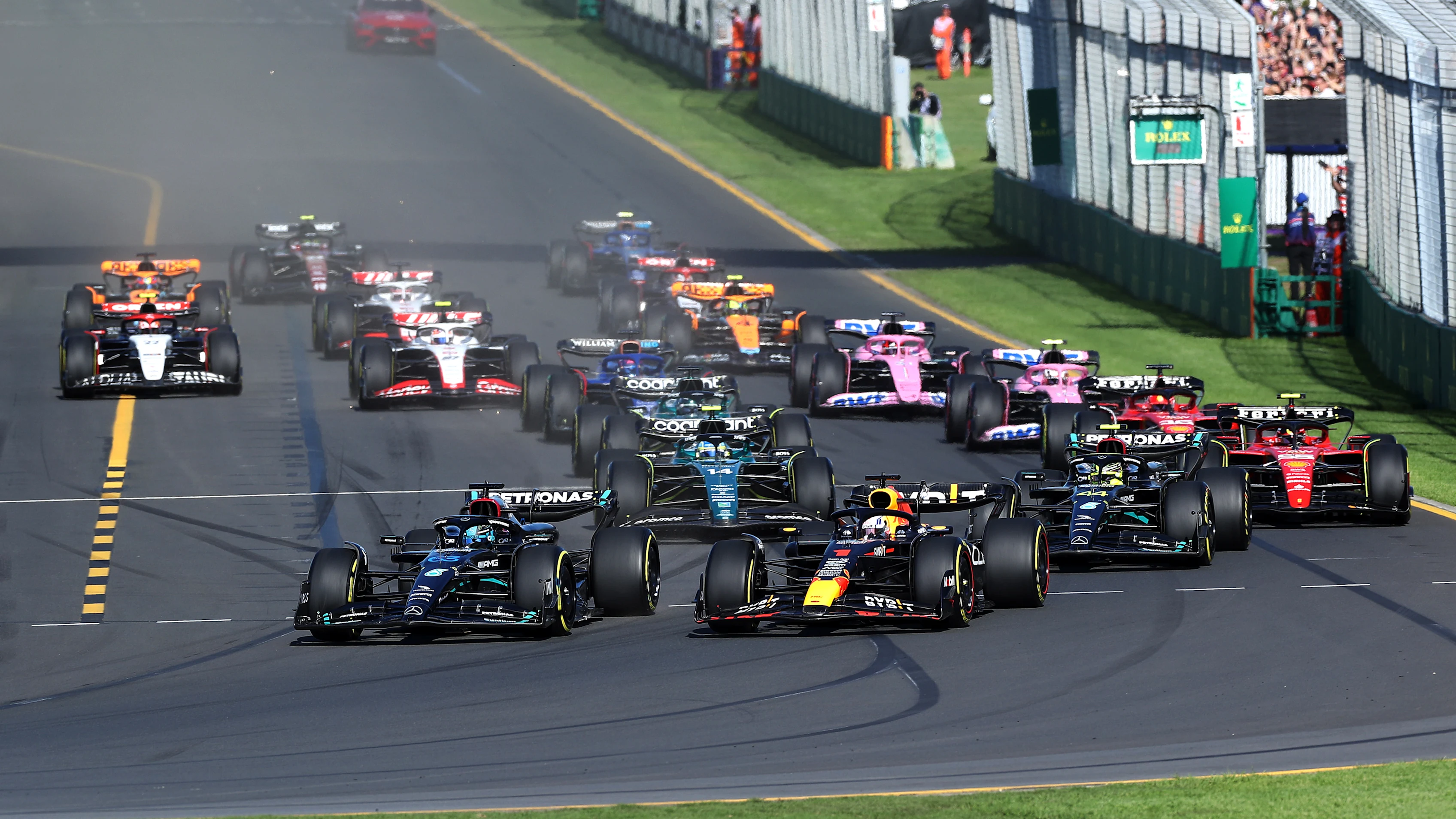
Max Verstappen won the Australian Grand Prix in 2023, as he did most of the races that season, but it was a complicated afternoon.
Alex Albon’s early crash through Turn 6 prompted a red flag, and the Grand Prix settled into a rhythm thereafter, until Kevin Magnussen struck the wall exiting Turn 3. The quantity of debris prompted another red flag and, with just three laps left, the restart was predictably chaotic.
Separate incidents accounted for several drivers, including both Alpine cars, and the race was halted for a third time – setting a new Formula 1 record.
The order was backdated to the previous restart, minus the eliminated cars, but this time the rolling restart coincided with the lap count being reached, bringing the race – finally – to an end.
2025 – Lando reigns in the rain
Melbourne returned as the season-opening Grand Prix in 2025, for the first time in six years, and delivered a thriller.
Rain showers on race day threw a spanner into the works, catching out several drivers, including distraught debutant Isack Hadjar on the formation lap.
Lando Norris and Oscar Piastri ran atop the field but a shower caused both to run off track, and while Norris recovered onto the circuit after his grassy excursion, a slightly wider Piastri spun and beached himself in the run-off.
Norris fended off a late charge from Verstappen to open what proved to be his title-winning campaign with the race victory, while Piastri nobly un-beached his McLaren and claimed ninth place.
So despite some close calls, 30 years into Melbourne’s stint of hosting the Australian GP the wait for home success goes on – could that change in 2026? We’ll soon find out…
Next Up
Related Articles
 LiveLIVE COVERAGE: Follow all the build-up ahead of the Bahrain GP
 Facts, stats and trivia ahead of the 2026 Bahrain GP
 UnlockedThe encouraging signs hidden within McLaren's Baku upgrade
 UnlockedTop 10 most memorable F1 moments at Sepang
 How to stream the 2026 Bahrain Grand Prix on F1 TV Premium
 UnlockedRalf Schumacher on his brother and ‘idol’ Michael