Drift kings, iconic cars and fantastic fans – Why Japanese car culture makes racing at Suzuka so special
Formula 1 is back at Suzuka, and here’s how the car culture in Japan adds an extra layer of excitement to the Suzuka race weekend.
The Japanese Grand Prix is always an event that feels bigger than just the race weekend. Set against the backdrop of one of the world’s most passionate and distinctive car cultures, Suzuka is a place that drivers name as a highlight year after year.
That's because, especially in Japan, cars aren’t just transport – they’re an important means of identity, creativity and community. As Formula 1 returns to the iconic Suzuka Circuit, it’s the perfect moment to look at the culture that makes this stop so special... both on and off the track.
Japan's automotive DNA
There's something about Japanese car culture that goes beyond the machines themselves. Walk through any major city like Tokyo, Osaka, or Yokohama, and you'll find an incredible subculture that's all about an exciting mix of horsepower and self-expression.
The cars that define this world have taken on an almost mythological status globally. Popular models such as the Nissan Skyline GT-R, the Honda NSX, the Toyota Supra and the Mazda RX-7 are icons in this realm. The devotion these cars inspire mimics religion, as their owners spend years or even decades modifying and perfecting the cars into art on wheels.
This is where the Japanese concept of monozukuri (the art of making things) underpins everything in this subculture. It's a philosophy that is rooted in craftsmanship, attention to detail and continuous improvement – you can see this in the precision and presentation at various car meetups. After all, in Japan, cars are something to be cared for and refined... not just driven. It's this spirit that has made Japanese car culture one of the most imitated and celebrated in the world.
Local streets to global screens
For many motorsport fans around the world – especially those who grew up in the late nineties and noughties – their first real glimpse into Japan’s car scene came through pop culture. Films like The Fast and the Furious: Tokyo Drift introduced drifting culture to a global audience through a huge movie franchise, turning something that was once relatively niche into a worldwide fascination.
But the reality of drifting runs far deeper than its portrayal in TV and movies. The technique itself traces back to Japanese motorsport in the 1970s, where driver Kunimitsu Takahashi began experimenting with controlled slides to maintain speed through corners to improve on-track times. What started as a racing technique soon took on a whole life of its own, evolving into something far more expressive and exciting.
This evolution mainly happened away from traditional racing circuits, thriving instead on Japan’s mountain passes. These narrow, winding roads became a playground for a new generation of drivers to push their cars to the limit through tight and technical corners. Over time, drifting became less about speed and instead more about style and flow.
One of the best to do it was the ‘Drift King’, Keiichi Tsuchiya, who took these various techniques and elevated them to a whole new level, turning drifting into a recognised discipline. His viral videos helped bring the culture into the spotlight and inspired a whole new crowd of drifting enthusiasts.
That exposure has only strengthened the culture’s influence on a global level. Today, Japanese performance cars and design philosophies are recognised worldwide, and for many F1 drivers, those early pop culture moments were part of what made Japan such an exciting place to race.
The drivers get it
There's a moment that tells you everything about how F1 drivers relate to Japanese car culture, and it involves the seven-time World Champion Lewis Hamilton, a Nissan Skyline GT-R, and the streets of Tokyo.
For a few years now, Hamilton has formed something of a tradition. Arriving early ahead of race weekend, getting behind the wheel of one of the most iconic Japanese cars ever made, and filming the whole thing. Because at the end of the day, despite being one of the most decorated drivers of all time, at heart, he’s also a guy that loves cool cars.
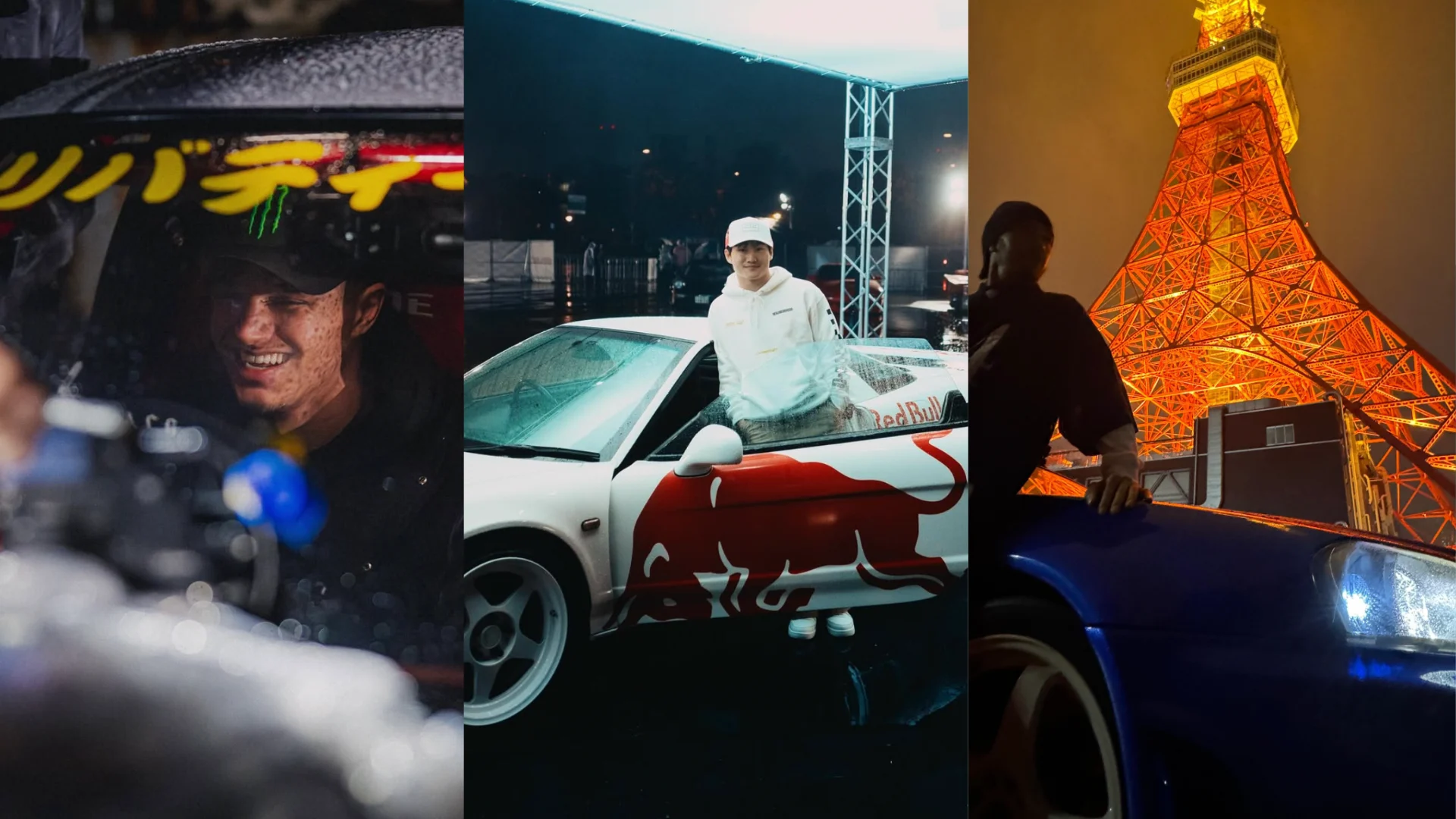
Liam Lawson is also a huge fan of Japanese machinery, as the New Zealander himself owns one of the icons – a heavily modified A90 Toyota Supra, as he’s put plenty of work into making it his own while documenting the process on his socials.
But for home hero Yuki Tsunoda, it means so much more. His dad owns a Honda S2000 – which was the first car the former Red Bull racer ever drove – and competed in an NSX at gymkhana events. Speaking to Red Bull ahead of the 2025 Japanese Grand Prix, he said: "I always enjoy driving around in the S2000 – it's my dad's car." So, when Tsunoda rocked up at the REBL Car Meet in Tokyo and called the vintage NSX the best car he'd ever seen, it was coming from the heart.
The incredible fans
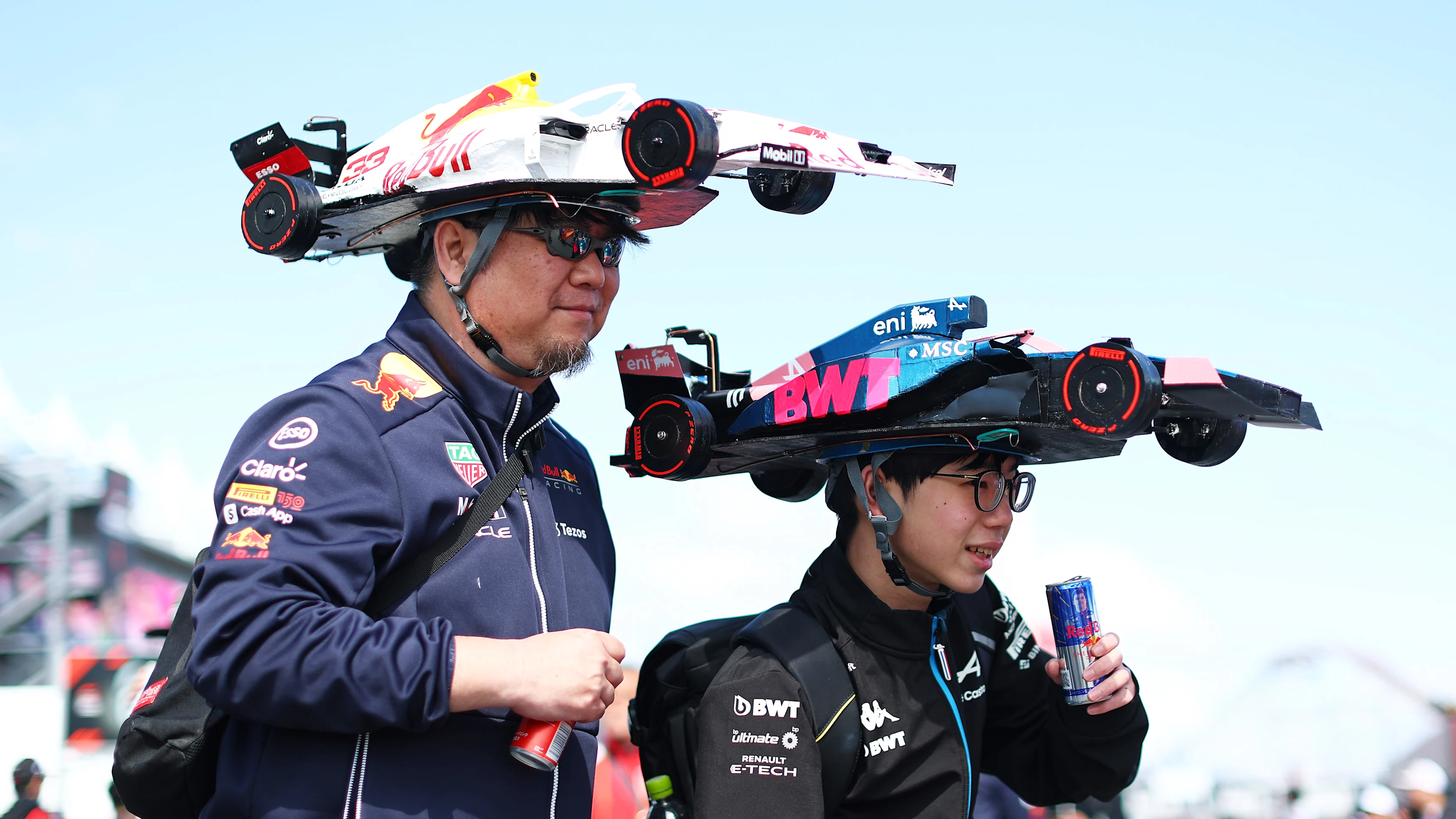
The fans that attend race weekends in Suzuka make the entire experience unforgettable for the drivers, thanks to their relentless enthusiasm and support. Many of them make their own merch – and we're not talking just team shirts, but full replica race suits, hand-crafted helmets, and even miniature rear wings worn on their heads. The level of effort involved would be remarkable anywhere, but at Suzuka, it's just what people do.
The atmosphere is tough to beat, as fans clap and shout for every single car that comes through. Not just their favourite team or driver – everyone. You’re likely to see a grandstand full of people in Red Bull caps going just as wild for the Haas duo as they do for Max Verstappen. Because, if nothing else, it's a genuine appreciation for the spectacle, the drivers, and the sport.
One of the most heartwarming moments happened in 2025, when a young fan turned up in a custom-made Mercedes kit alongside his dad. George Russell spotted them in the crowd, invited them on stage and did his signature T-pose with the young fan to make memories that would last a lifetime. Those interactions characterise the magical weekend in Japan.
It all connects back to the same thing – Japan has a special relationship with cars, craft, devotion, and the idea that how you do something matters as much as what you do – a belief that seems to run deeper here than anywhere else. When F1 comes to Suzuka every year, the fans time-and-again remind the world of how joyful the passion for racing can look.
Next Up
Related Articles
 What time is the 2026 Bahrain GP and how can I watch it?
 F1 Business Summit adds new Las Vegas speakers
 UnlockedTop 10 most memorable F1 moments at Sepang
 Aston Martin keep Alonso and Stroll for 2027
 All you need to know about the Sepang International Circuit
 Facts, stats and trivia ahead of the 2026 Bahrain GP