Mercedes' incredible success through Formula 1 history
As Mercedes celebrate their ninth Constructors' Championship, we look back at the Silver Arrows' remarkable history of Formula 1 success.
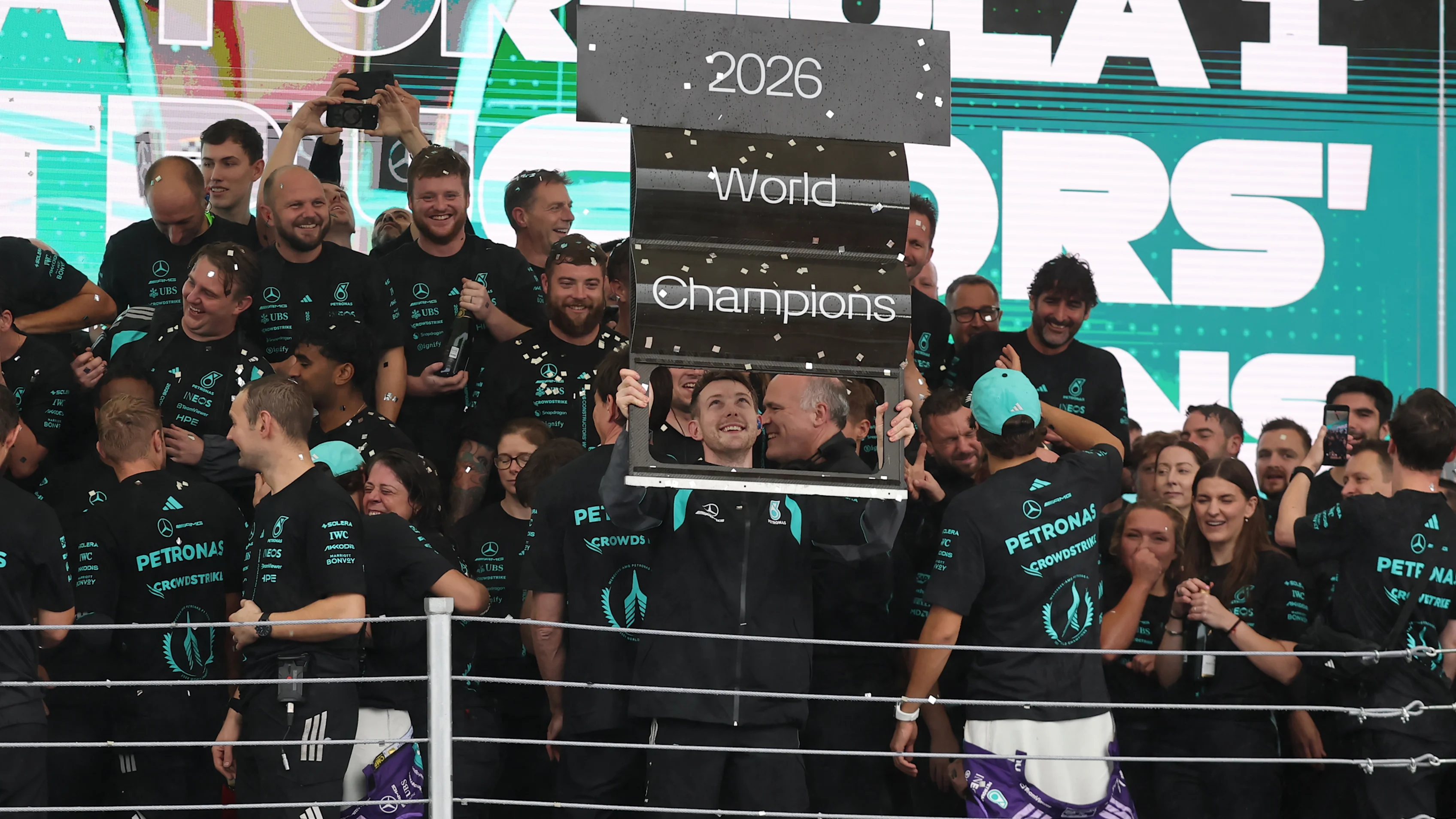
After Mercedes secured their ninth Constructors' Championship in 2026, F1.com looks back at the Silver Arrows' remarkable history, including Juan Manuel Fangio's early success, their record-breaking run of eight consecutive titles and their return to the top of Formula 1.
Mercedes have written their name into the F1 history books once again by clinching a ninth constructors' crown, their points at the 2026 Sao Paulo Grand Prix returning them to the top of the sport for the first time in five years.
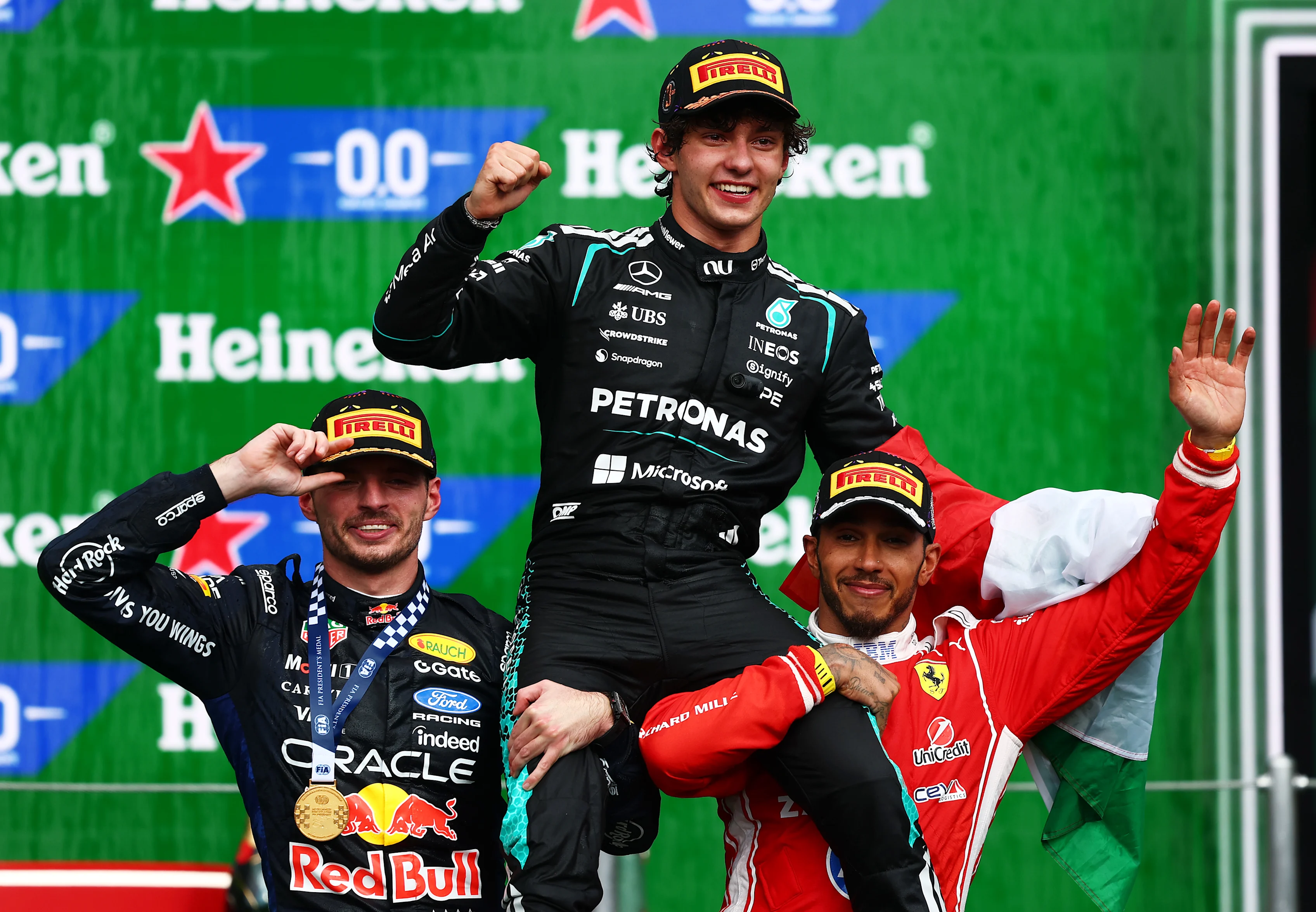
George Russell and Kimi Antonelli's fourth and fifth-place finishes at Interlagos were enough to seal the teams' title, just one week after the young Italian claimed his maiden Drivers' Championship in Mexico.
The achievement puts Mercedes level with Williams on nine constructors' titles, behind only Ferrari's 16 and McLaren's 10, and adds another chapter to a remarkable history that stretches back more than seven decades.
Their success began on track long before Lewis Hamilton, Nico Rosberg and the modern Mercedes team won eight consecutive Constructors' Championships though, that period between 2014 and 2021 one of the most dominant in F1 history...
The Silver Arrows' early success
Mercedes' history in Grand Prix racing dates back well before the Formula 1 World Championship was established in 1950, with the famous Silver Arrows enjoying considerable success during the 1930s.
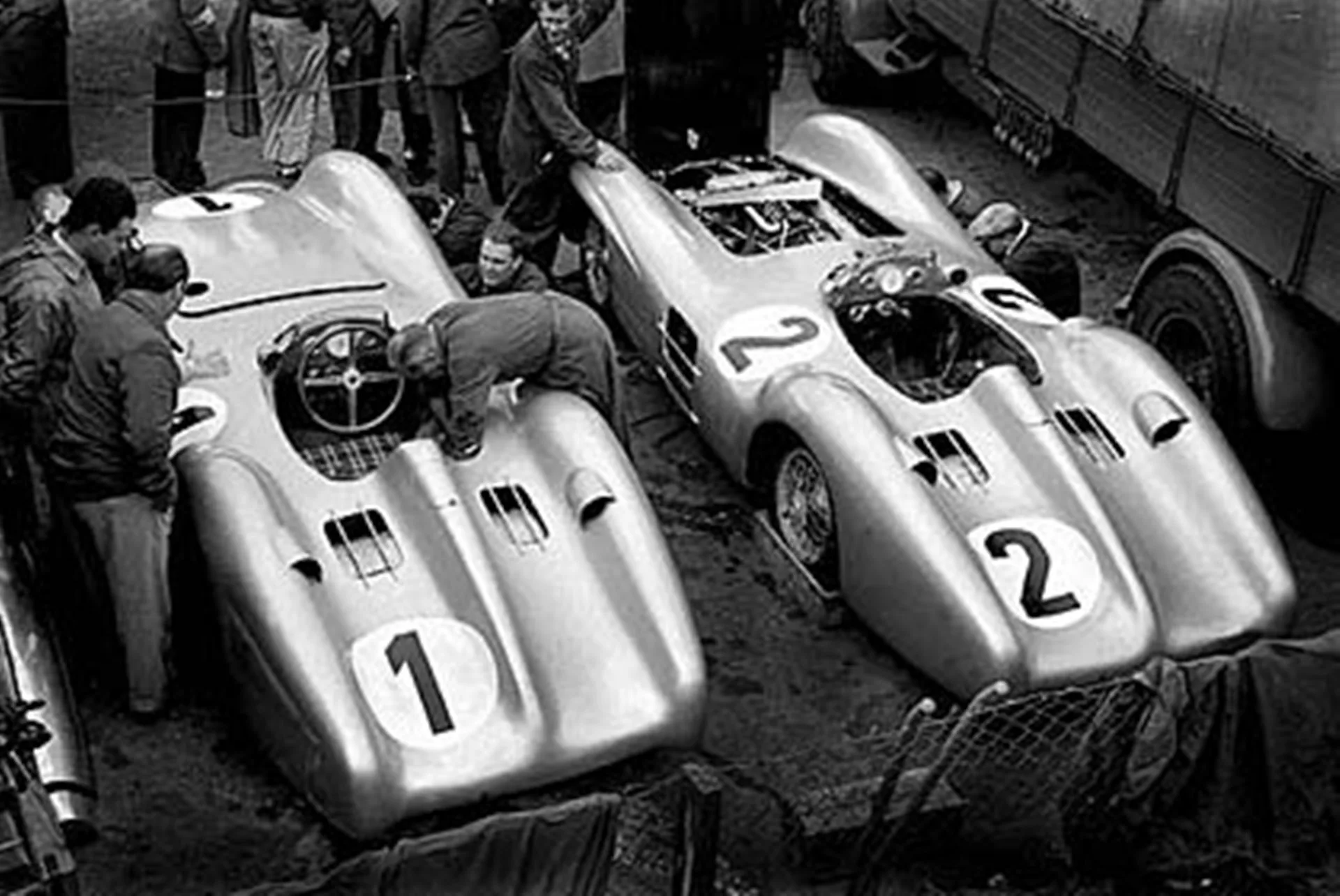
The German manufacturer made its World Championship debut at the 1954 French Grand Prix, with Juan Manuel Fangio and Karl Kling securing a one-two finish in their first race behind the wheel of the Mercedes W196.
Fangio went on to win four races for Mercedes that season, securing his second Drivers' Championship, before returning in 1955 to claim another title alongside team mate Stirling Moss. The following campaign saw Mercedes win five of the six World Championship Grands Prix in which they competed, including a famous victory for Moss at the British Grand Prix – the first of his 16 career wins.
However, Mercedes withdrew from motorsport at the end of 1955 following a season overshadowed by the Le Mans disaster, in which driver Pierre Levegh and more than 80 spectators lost their lives. The decision brought an early end to the manufacturer's first period of F1 success, with Mercedes having claimed two Drivers' Championships in just two seasons. The Constructors' Championship would not be introduced until 1958.
Mercedes eventually returned to F1 as an engine supplier during the 1990s, initially partnering with Sauber before beginning a successful relationship with McLaren, where drivers Mika Hakkinen and Lewis Hamilton would go on to win titles with Mercedes power.
But it would take until 2010 for the manufacturer to return to the grid as a full works team.
A new era of Mercedes dominance
After Brawn GP's remarkable championship-winning campaign in 2009, Mercedes purchased the Brackley-based outfit and returned to Formula 1 with seven-time World Champion Michael Schumacher and Nico Rosberg as their drivers.
The team's early seasons brought mixed results, although Rosberg secured Mercedes' first victory as a works team since 1955 at the 2012 Chinese Grand Prix.
The arrival of Hamilton in 2013 marked another significant moment, with the Briton joining Rosberg as Mercedes prepared for major changes to Formula 1's technical regulations.
When the turbo-hybrid era began in 2014, Mercedes emerged as the team to beat. Winning 16 of the season's 19 Grands Prix, Hamilton and Rosberg dominated the championship, with the former claiming his second drivers' title as Mercedes secured their first constructors' crown.
It was the beginning of an extraordinary run.
They repeated the feat in 2015, once again winning 16 of 19 races, before taking their dominance to another level in 2016, claiming 19 victories across 21 Grands Prix. That year also brought one of the sport's most memorable intra-team rivalries, with Rosberg defeating Hamilton to secure his maiden World Championship before announcing his retirement just days later.

Valtteri Bottas joined Mercedes for 2017, helping the team continue their winning streak alongside Hamilton, who added four consecutive drivers' titles between 2017 and 2020.
In their time together, Hamilton claimed six drivers' titles, Rosberg added another, and Mercedes established themselves as one of the most successful outfits the sport had ever seen.
Even when Max Verstappen ended their run of drivers' crowns in 2021, Mercedes maintained their advantage in the teams' standings.
By the end of that year, Mercedes had achieved something no other team in F1 history had managed – eight consecutive Constructors' Championships.
But major regulation changes in 2022 would bring an end to their reign.

Returning to the top in 2026
The introduction of new ground-effect regulations in 2022 proved challenging for Mercedes, who struggled to replicate their previous dominance.
Russell secured the team's only victory of that season in Sao Paulo, while 2023 marked their first winless campaign since 2011. And whilst the Silver Arrows returned to winning ways in 2024, claiming four victories, they finished fourth in the standings.
The departure of Hamilton to Ferrari at the end of that year also marked the conclusion of the most successful driver-team partnership in Formula 1 history, with the seven-time World Champion having secured 84 Grand Prix victories for Mercedes.
In his place came the then 18-year-old Italian Antonelli, who partnered Russell for the 2025 campaign. The team finished second in the standings that year, setting the stage for another major opportunity as the sport prepared to introduce new technical regulations for 2026.
Just as they had done in 2014, Mercedes capitalised on the changes.
Russell opened the 2026 season with victory in Australia, before Antonelli secured his maiden win in China and quickly established himself as a championship contender.
By the time the paddock arrived in Brazil, Mercedes had claimed 12 Grand Prix victories from 19 Grands Prix, with Antonelli having already secured the Drivers' Championship in Mexico.
Their ninth teams' title followed at Interlagos, completing another championship double and making Mercedes the third-most successful constructor in the sport's history, level with Williams.
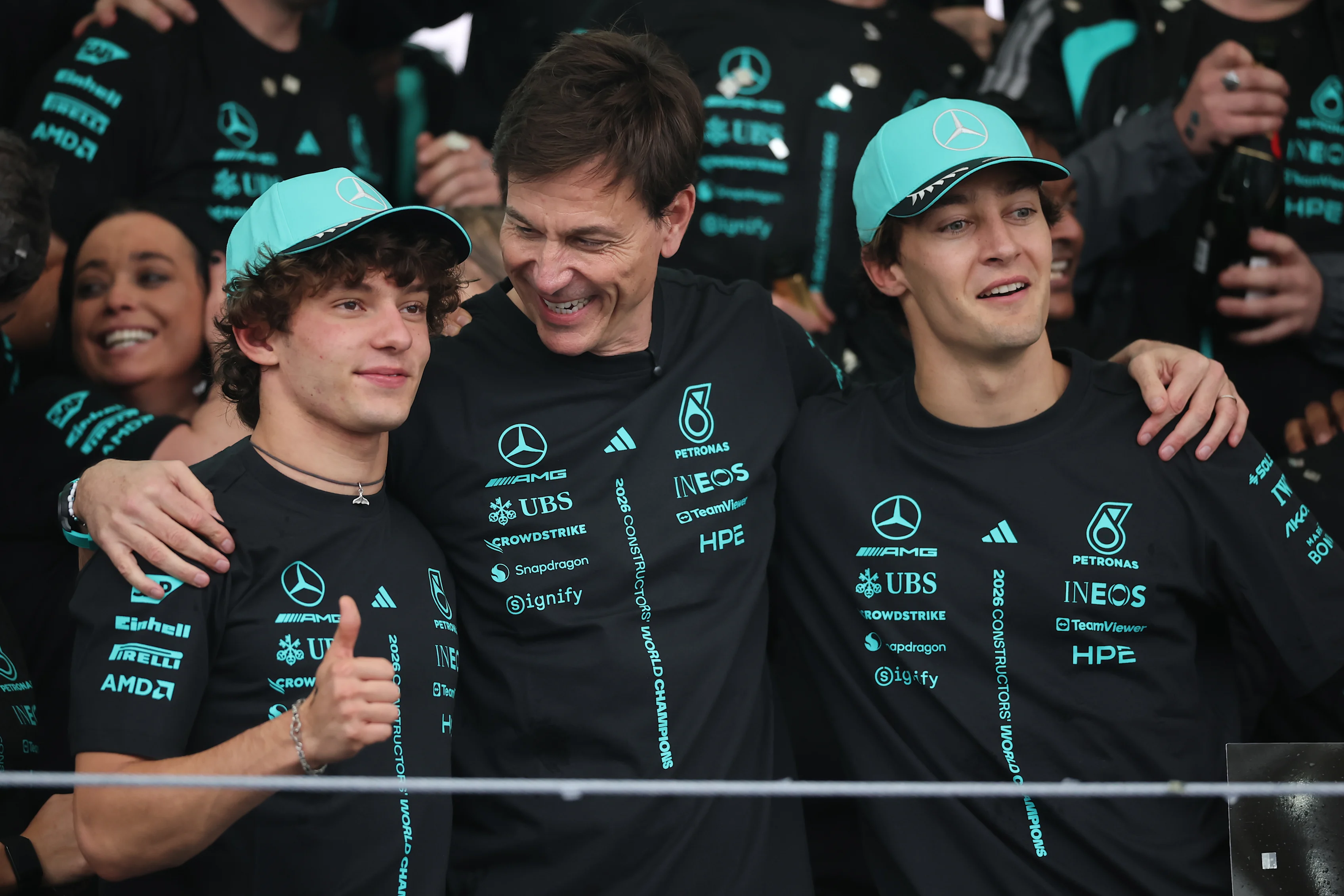
For Team Principal Toto Wolff, who has overseen all nine of Mercedes' Constructors' Championships – an achievement that sees him equal Sir Frank Williams' record for the most titles as a team boss – the win carries particular significance after four challenging seasons.
"We've taken a few years to be back on the top spot. Not many teams have been able to come back from such a situation.
"And it just shows that, you know, the great work, the great people that we have in our organisation. And it's fantastic to be among them."
More than 70 years after Fangio first tasted championship success with Mercedes, the Silver Arrows have once again established themselves at the summit of Formula 1.

Next Up
Related Articles
 UnlockedThe 110 seconds that almost won Verstappen the Sao Paulo GP
 Unlocked5 Winners and 5 Losers from Sao Paulo
 Alonso credits ‘phenomenal’ car after strong drive in Brazil
 F1 ACADEMY Champion Palmowski graduates to Formula Regional
 Camara experiences every condition in ‘tricky’ Haas debut
 Vasseur explains Ferrari’s tyre struggles in Brazil