TECH WEEKLY: How F1 teams balanced cooling and downforce in Hungary – and where McLaren made the difference
It was another intriguing weekend at the Hungaroring from a technical perspective, as Mark Hughes explains and Giorgio Piola illustrates.

.webp)
The Hungaroring presents a potentially tricky combination of demands, given that it’s a track which heavily rewards raw downforce but which can have very high cooling demands.
The combination of a Budapest summer with the relative lack of straight-line running, plus long corners where the front wheels are on lock for a long time, diverting airflow away from the radiator inlets, means that the bodywork will have to be opened up extensively.
This extracts a high cost aerodynamically. So, the conflict in demands and the jeopardy involved in trying to maximise performance, is quite explicit.

Next Up
Related Articles
.webp) Unlocked6 Winners and 5 Losers from Azerbaijan
Unlocked6 Winners and 5 Losers from Azerbaijan BettingRed Bull's Baku brilliance gives Verstappen fresh hope
 Leclerc urges Ferrari to ‘bring upgrades to close the gap’
  Vasseur offers Ferrari upgrade promise to frustrated Leclerc
 What time is the 2026 Bahrain GP and how can I watch it?
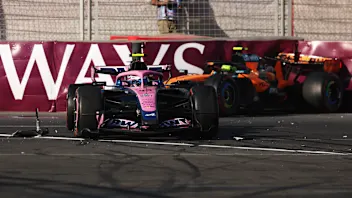 Alpine consider 'what action should be taken' after Colapinto crash