The key challenges F1 drivers will tackle at the Madring – as identified by them
The Madring hosts its first ever F1 Grand Prix weekend as the sport's drivers prepare to take on a brand-new circuit.
/GettyImages-2294471458.webp)
Having sampled the brand-new Madring in team simulators, Formula 1 drivers will finally get their first proper look when they take to the track in FP1 on Friday.
Throughout Thursday, ahead of the Spanish Grand Prix weekend, the talk was of how challenging this weekend is going to be. It goes without saying that a high-speed circuit surrounded by walls will punish mistakes, as was evident at the recent Formula 3 test.
But what about some of the more specific challenges presented by the new venue? Here are some that were highlighted by drivers today...
Curving braking areas will be tricky
Several drivers have noted how tricky some of the curving Madrid braking areas are, with the cars still turning while slowing down.
“You've got a lot of straight line braking,” said Kimi Antonelli. “But a lot of brakings where you're actually still turning.
"For example, Turn 17 is a corner where, when you hit the brake, you're still turning, and then you straighten the car. So it's very tricky track.”
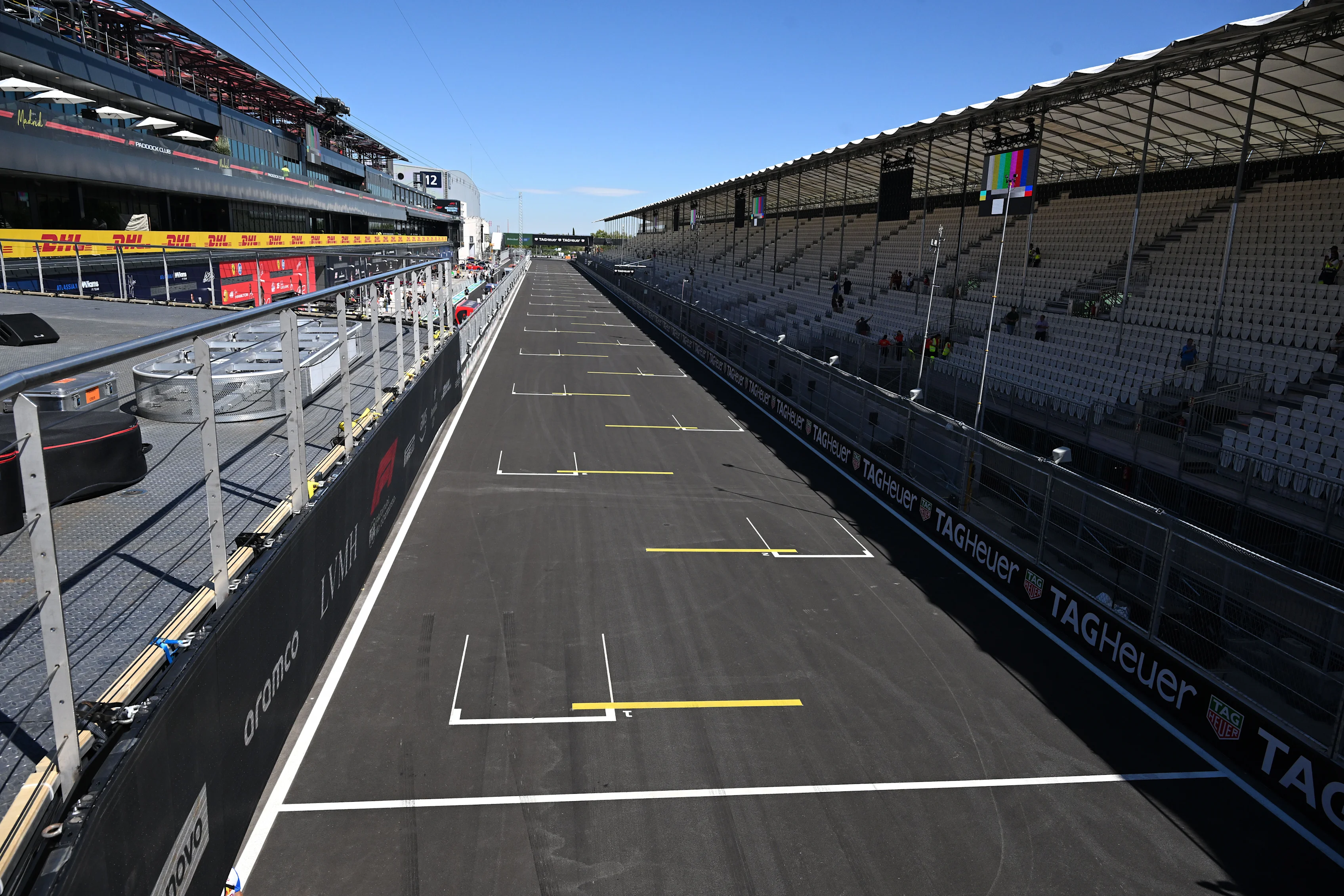
“The walls are very close, so there's no margin for error,” said his Mercedes team mate George Russell. “But then you have other corners that are quite like Baku, where you're coming from a high speed into a slow braking zone, you're braking and turning at the same time.
“So locking tyres is going to be easy, and if you lock up, you'll be straight in the wall. I think it's going to be really challenging for us as drivers, very challenging. But very exciting at the same time, with zero margin for mistakes.”
Blind corners
Much like Jeddah, in several high-speed parts of the track the drivers have limited vision between the curving walls.
That obviously makes it tricky if an incident occurs up ahead, or if a car is travelling slowly due to an issue, or simply because it’s on an in-lap or out-lap.
“We have a lot of blind corners,” said Lando Norris. “A lot of the corners you cannot see around, so it's difficult to predict things. This just makes it always a bigger challenge inside the cockpit of a car – the fact you cannot see more than 50% of a corner at the end of one time.”
“Without stating the obvious, a lot of walls, a lot of high-speed corners, a lot of blind corners,” Alex Albon added. “[It] gives me vibes of Macau, but more for an F1 track."
/GettyImages-2294473900.webp)
Set-up will involve compromises
At every circuit they go to teams have to find the ideal aero compromise between performance gained on the straights and in the corners.
At the Madring it will be particularly complicated given the variety of turns, and the speed to be gained by riding kerbs.
“Driving-wise, you've got all kind of corners, you've got chicanes, fast corners, banked corners, medium speed,” Antonelli explains. “It's also complicated on the engineering side, because I think finding a set-up that is a good compromise for the whole lap is not going to be easy.
"You can find a set-up that helps you in the chicanes when you need to cut kerbs, or a set-up that helps you in the fast corners.
“But to find a set-up that is good over kerbs, good on change of direction, and good on fast corners, is going to be difficult, because whenever you do a set-up, there's always pros and cons. It helps in some ways, in some corners, but in others it might make your life a bit harder.”
Energy deployment has to keep up with corner speeds
It’s not just the chassis set-up that will be difficult for the teams. As grip ramps up over the course of the weekend, corners become faster, and that in turn has a direct influence on energy deployment – a lift in a fast corner has a big impact compared to staying flat.
In the same vein with low fuel and new soft tyres for Qualifying, as well as more rubber on the track after three practice sessions and support events, cornering speeds will increase for the cars down the order. Their power units will be operating in unfamiliar territory at the most critical point in the weekend.
“There's a lot of corners on this track that will be between 90% and 100% throttle,” Albon said. “I think for the top teams it will be flat out, for the midfield teams and the back of the field teams, a bigger lift, which has a big effect on deployment.
“So without going too technical, if you do a corner flat or not massively changes the way the deployment works. You don't want to go into Qualifying and suddenly all these corners start to become flat, and your deployment starts to move around a lot.”
/GettyImages-2294355788.webp)
Overtaking will be difficult on Sunday
Sim running has indicated that overtaking won’t be easy in the race, and Williams' Albon has an intriguing take on why.
“You've got a lot of combined corners, which just thinking of overtaking on Sunday, it feels like it's quite easy to defend,” he said. “You just put the car in the middle of the track, and you're not going to get a car that's going to go past you. So that just means that it will be more of a deployment overtake than a braking overtake.”
The difficulty in overtaking will in turn put a sharp focus on having a fast car over one lap, something that has already caught the attention of Charles Leclerc.
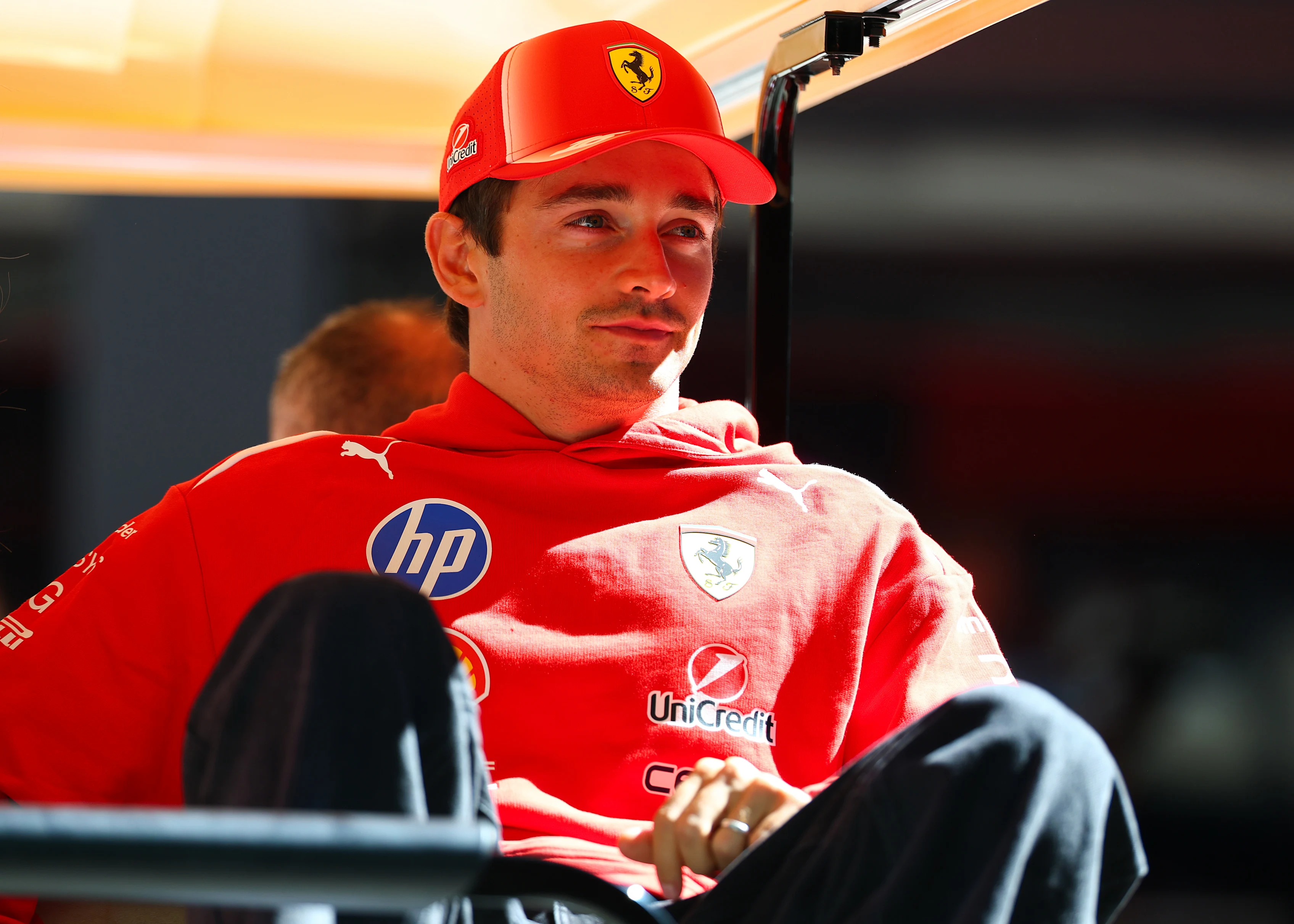
“I think it's the kind of weekend where you want to focus more on the qualifying pace than on the race pace,” said the Ferrari driver. “Because come Sunday, I feel like it's going to be difficult – apart from the start – to kind of gain positions.
“So for sure, our priority will be to try and maximise the practices in order to make sure that in Q3 we end up with the right car, and with a good lap. So yeah, the priority will be shifted a little bit more towards Qualifying.
“I still think the race can be interesting with the strategy, but maybe with the overtaking a bit less than other tracks.”
The perfect lap will be hard to nail
The sheer number of corners to get right and the need in 2026 to optimise battery usage mean that it won’t be easy to nail the perfect lap in Qualifying.
There’s also the challenge of tyre management – you have to have the fronts up to temperature for the corners at the start of the lap, while avoiding rear overheating later on. And inevitably there will be traffic.
“It's going to be a very interesting track to drive,” said Liam Lawson. “Very technical, obviously, I think just quite challenging for us. And through the weekend, trying to put laps together, I think it's one of those tracks that you're not going to feel like you've nailed a lap.
“Honestly, half the time there are going to be one or two mistakes in a lap – probably all the time. It's quite difficult.”
Gabriel Bortoleto added: “I think basically all the corners are very challenging. But probably T5 and T6 are going to be very challenging, with lots of kerb usage there, and then going a bit uphill and then downhill, and then having some high-speed corners just after.
“I think that’s the typical type of track that you finish a lap and you can really feel your breathing, because it’s very mentally exhausting through the lap. And to nail a perfect lap is also difficult – but when you do it, it’s very, very promising.”
Next Up
Related Articles
/EXCLUSIVEINTERVIEWADHOC%20FEATURE%20V4%20DISPLAY%20(10).webp) ExclusiveSainz on bringing F1 back to his home city of Madrid
ExclusiveSainz on bringing F1 back to his home city of Madrid/PADDOCK%20INSIDER%20header%20template.webp) UnlockedAll the stories that got the Madrid paddock talking
UnlockedAll the stories that got the Madrid paddock talking How to stream the 2026 Spanish Grand Prix on F1 TV Premium
 ‘My team mate has done a better job than me’ – Russell
 ‘Best day of my life’ – Antonelli reflects on Monza triumph
 8 of the best debut Grands Prix in F1 history