Where does Russell’s Baku win rank in the closest ever F1 finishes?
Which races have been won by an even tighter margin than George Russell's 0.196s victory over Max Verstappen in Azerbaijan?
Max Verstappen chased George Russell all the way to the line at the Azerbaijan Grand Prix, coming just 0.196s shy of snatching the win away from the Mercedes driver.
It was a gap more than four times smaller than Russell’s pole position advantage, and among the closest winning margins in the history of Formula 1 – but it falls 0.014s and one position shy of squeaking into the top 10 closest F1 finishes ever.
So which races have been won by even less than that? Our in-house data team have got the top 10...
10. 2002 Austrian Grand Prix – 0.182s
Ferrari dominated the 2002 season but at the sixth round of the year invoked team orders that were among the most controversial in history.
Rubens Barrichello headed Michael Schumacher, and for a second successive year was instructed to allow the team leader through. But whereas in 2001 it was for second place, in 2002 it was for the win.
Barrichello did so exiting the final corner, and a hesitant Schumacher also slowed in response, the pair crawling over the line split by 0.182s in Schumacher’s favour. A farcical podium ceremony took place, with Schumacher insisting Barrichello stand on the top step, with the Brazilian being handed the winner’s trophy. Fines followed.
9. 2023 Australian Grand Prix – 0.179s
Australia’s race in 2023 was a messy encounter, amid a record number of red flags, and several standing starts.
The last of those triggered more carnage, and proceedings were suspended once more; with no more racing laps remaining when the signal was given for the rolling restart drivers were greeted with the chequered flag.
Long-time race leader Max Verstappen thus crossed the line, followed by Lewis Hamilton, with no overtaking permitted. The gap between the pair was a notional 0.179s but it was not remotely indicative of a closely-fought Grand Prix, as Verstappen was 10 seconds up the road until the late melees.
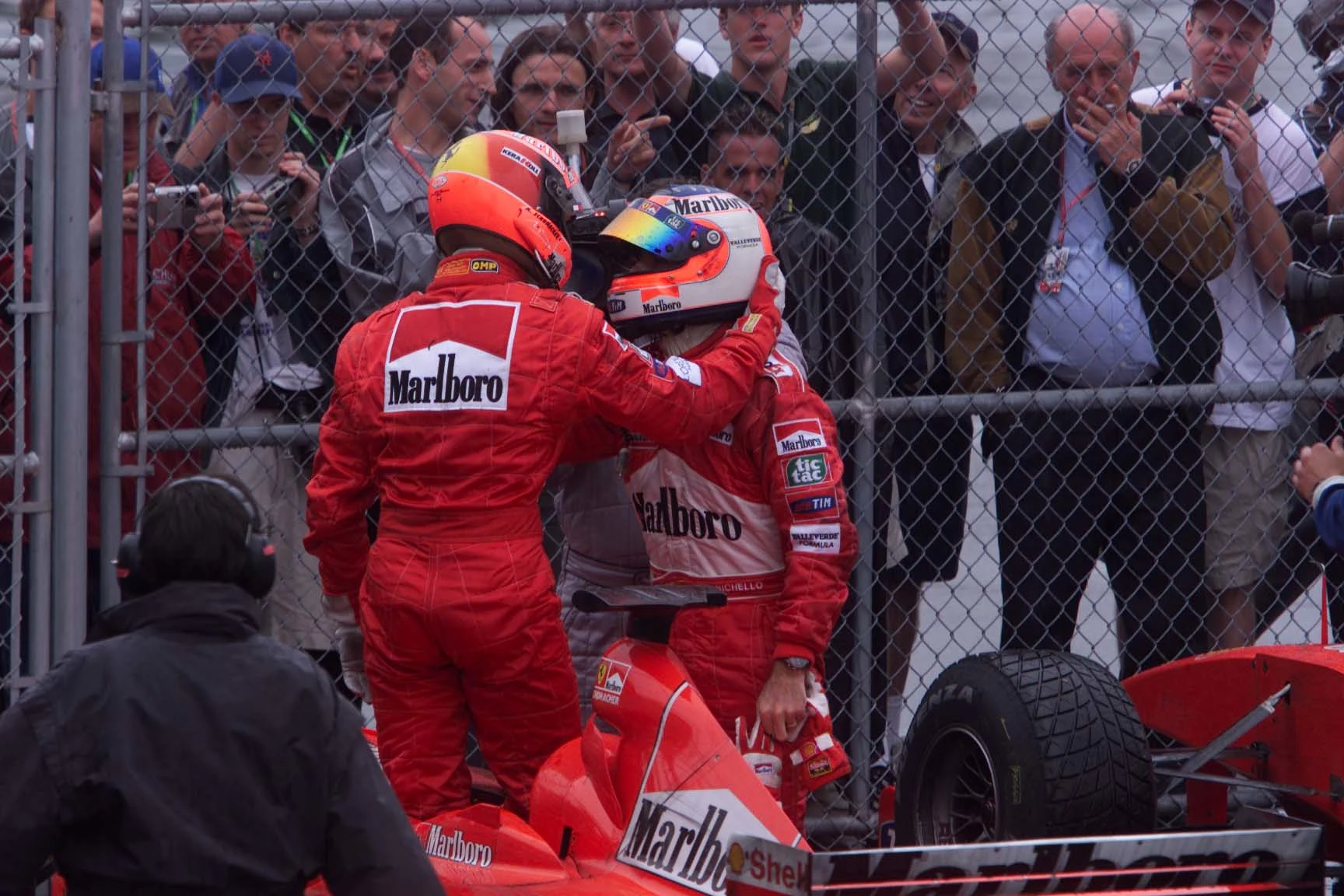
8. 2000 Canadian Grand Prix – 0.174s
A second appearance already on this list for Michael Schumacher and Rubens Barrichello (and, spoiler alert: it won’t be their last).
Schumacher led Barrichello in a dry/wet race in Canada, but during the closing stages in increasingly treacherous conditions his Ferrari developed a brake problem, and having retired from the previous round in Monaco reaching the flag was a priority.
With breathing room to the remainder of the field, Schumacher was able to back off slightly across the last laps – going almost four seconds slower on the last lap – to nurse the car to the finish.
Barrichello, who was then still chasing his maiden win, dutifully followed him home in second.
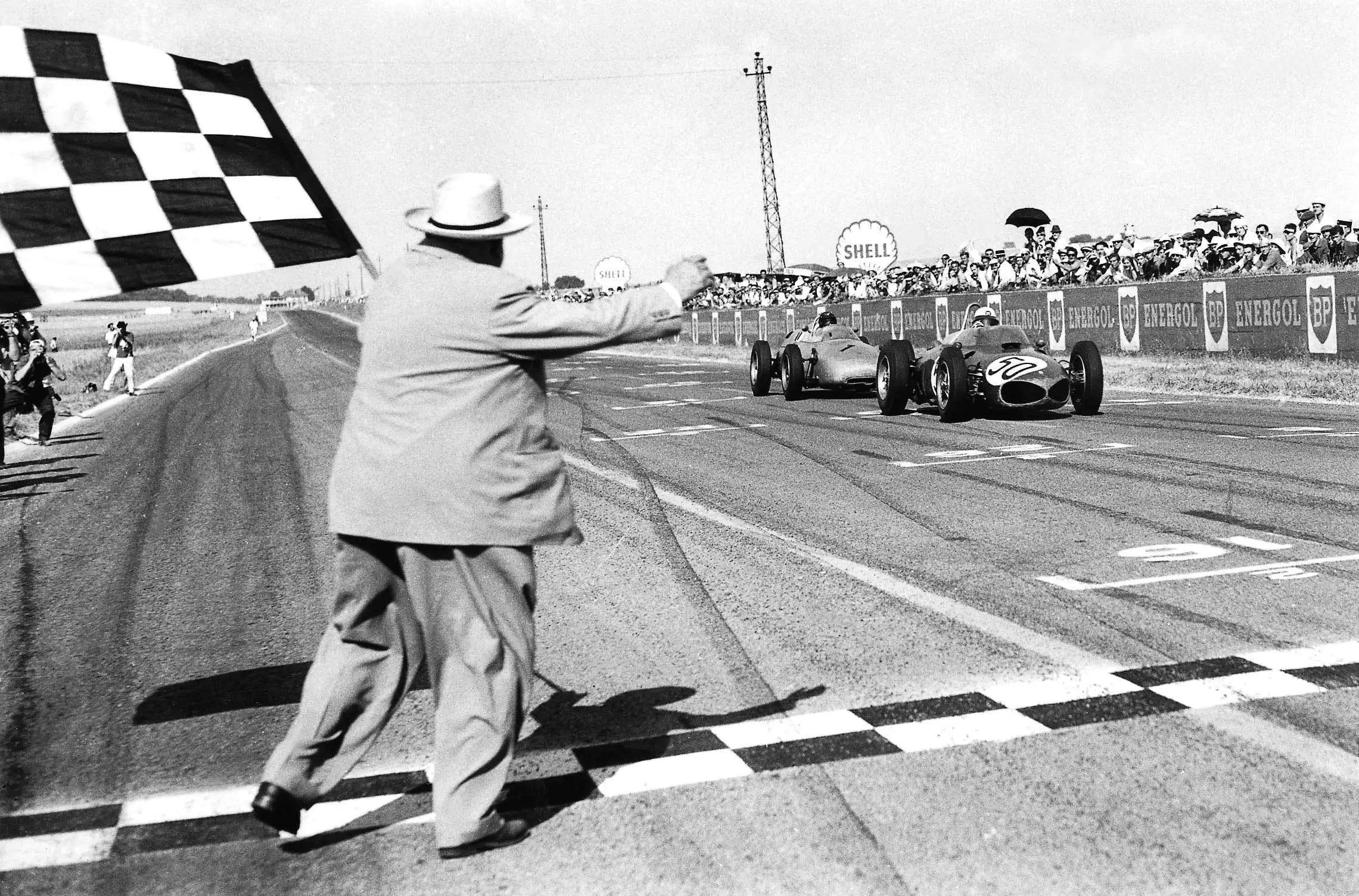
7. 1961 French Grand Prix – 0.1s
In the early 1960s timing data only went down to one decimal place, so that was what split Giancarlo Baghetti and Dan Gurney after 52 laps of racing around Reims’ high-speed roads, the course having only five corners of note.
Other challengers fell by the wayside, and so Baghetti and Gurney duelled, with the former out-dragging the latter to the finish line.
Baghetti also became the only driver aside from Nino Farina, who won the inaugural Grand Prix (excluding the anomalous Indianapolis 500 when it was part of the championship), to take a debut win.
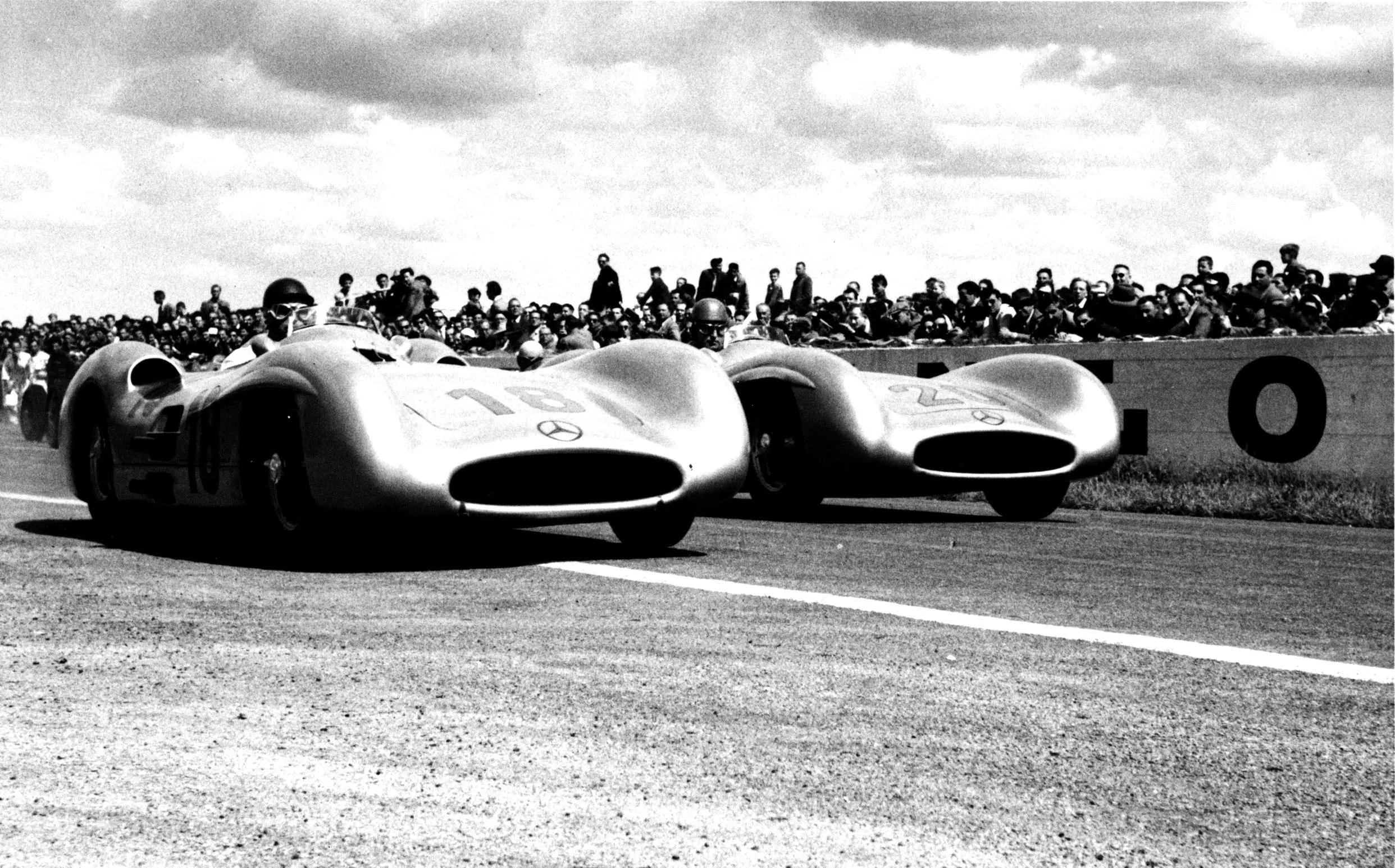
6. 1954 French Grand Prix – 0.1s
Mercedes’ first foray into Formula 1 lasted only 12 Grands Prix in the 1950s but it was a supremely successful spell all the same, as they won nine of them.
The first of those wins came on their debut at Reims, entering the championship mid-season once the W196 was finally ready for action.
The streamlined bodywork was fitted to the new car for Reims’ high-speed straights, and Mercedes dominated. Team orders were imposed, and the great Juan Manuel Fangio led Karl Kling for a 1-2. They were the only drivers to finish the race on the lead lap.
5. 1969 Italian Grand Prix – 0.08s
The first of two appearances for Monza on the list, which is perhaps unsurprising given the high-speed track is renowned for its slipstream battles.
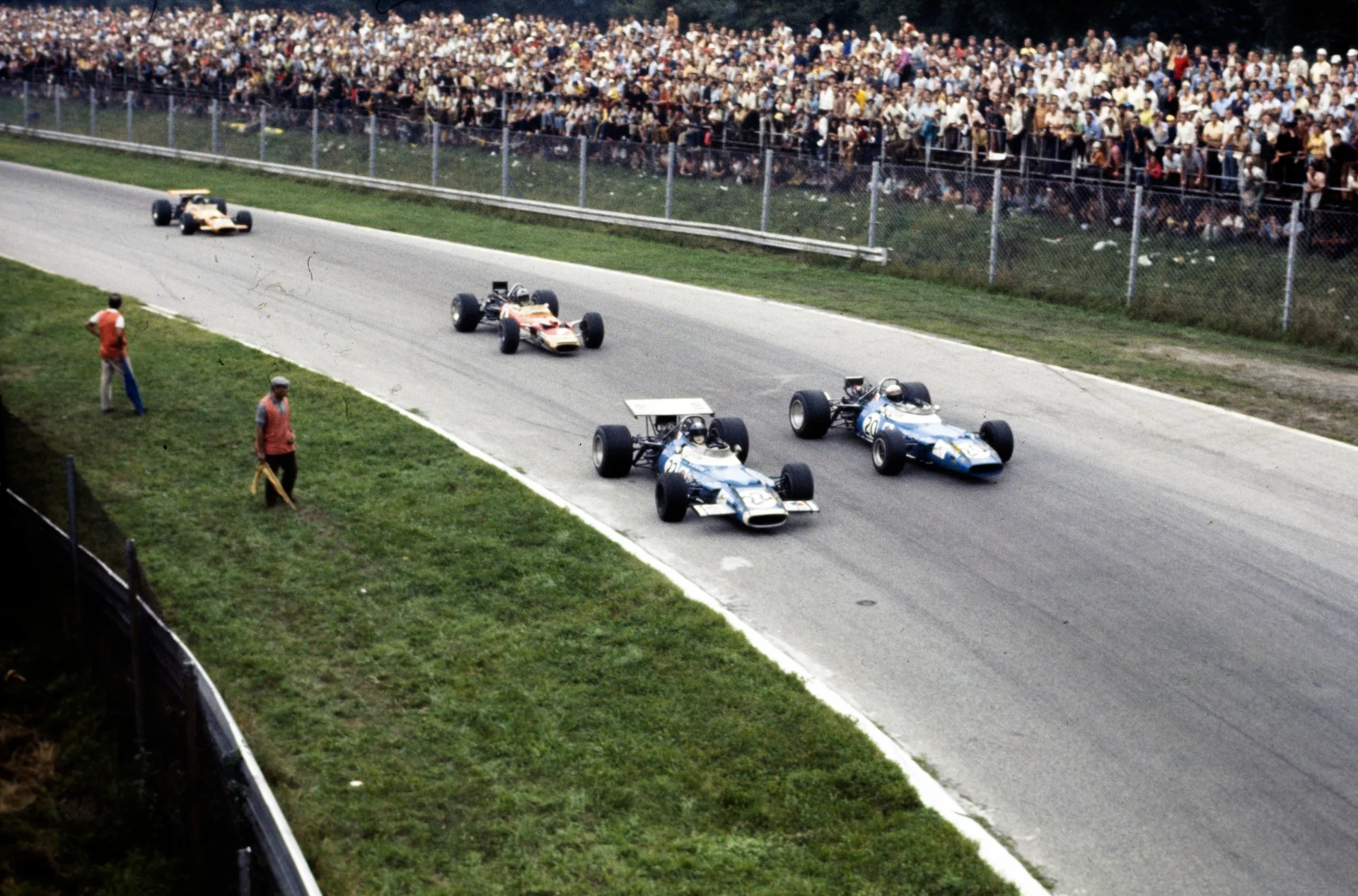
The 1969 encounter was an all-time classic, as four drivers battled for the lead, and Jean-Pierre Beltoise grabbed the inside line into Parabolica on the last of the 68 laps.
But Jackie Stewart got the cutback and overhauled Beltoise, while Jochen Rindt shadowed Stewart and finished just 0.08s behind the Matra.
Beltoise had to make do with third, and Bruce McLaren ensured the top four flashed past the spectators separated by just 0.019s.
4. 1982 Austrian Grand Prix – 0.05s
Alain Prost held an advantage of almost half a minute at the Osterreichring but with five of the 52 laps left to run his Renault met a fiery and smoky demise.
That left Elio de Angelis and Keke Rosberg up front, as both pursued their first wins. De Angelis’ advantage as they began the final lap was a comfortable 1.6 seconds, but Rosberg put in a monster last lap to close in as they raced around the hills.
De Angelis hugged the inside line through the final two right-hand sweeps but Rosberg’s greater speed enabled him to draw alongside as they hurtled along the start/finish straight. De Angelis ultimately held on, but only by half a car’s length.
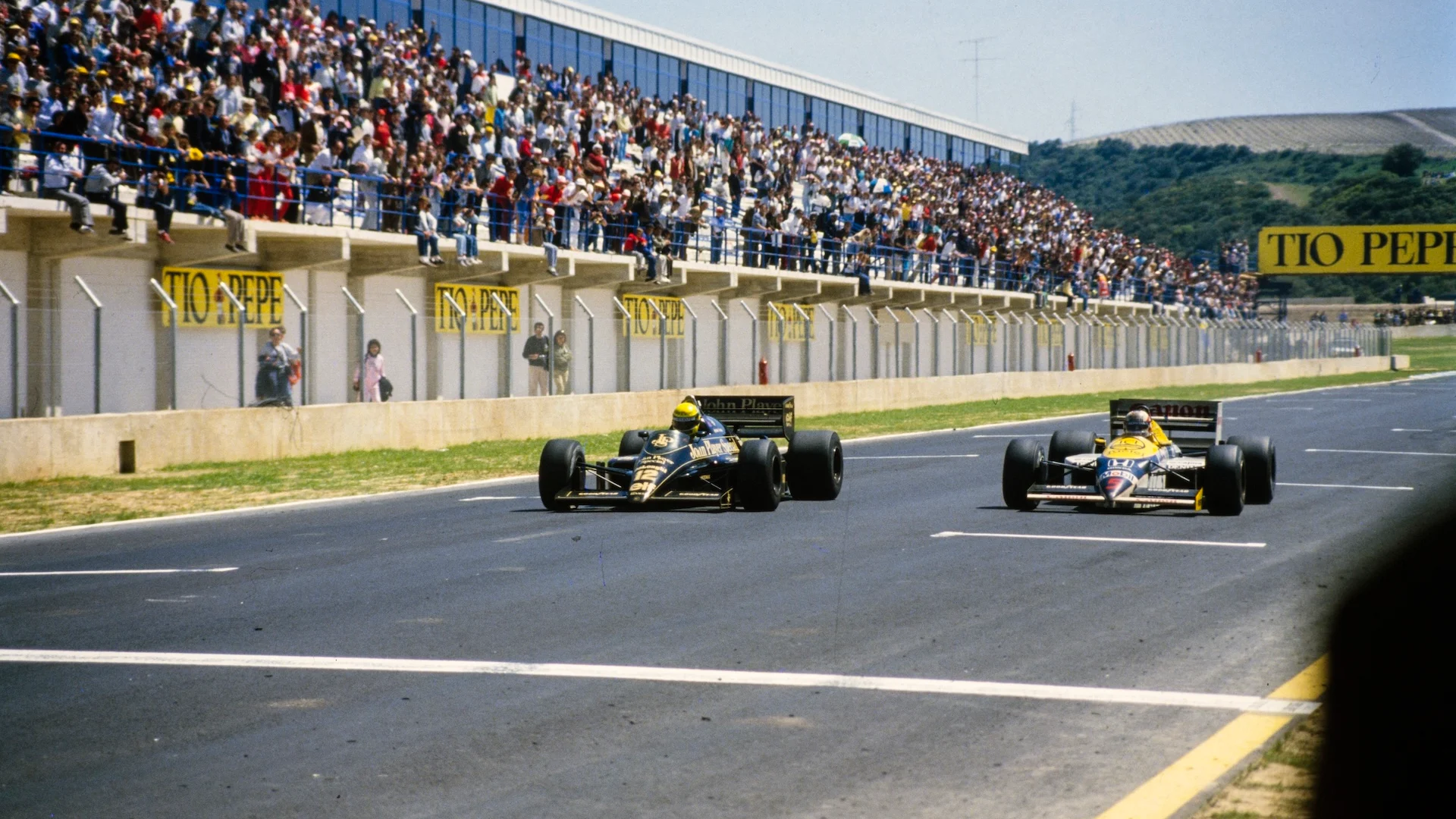
3. 1986 Spanish Grand Prix – 0.014s
Spain returned to the Formula 1 calendar after a five-year absence and it was a first appearance at Jerez.
Alain Prost, Nigel Mansell and Ayrton Senna battled for honours and put on a classic, with Senna moving into the lead after Mansell pitted for fresh tyres.
Across the final laps Mansell surged up to the rear of Senna’s Lotus but the Brazilian naturally made his car as wide as possible. Mansell got a great exit from the final hairpin on the last lap and ducked out from behind the slipstream, but Senna managed to hold on by a margin of just 0.014s.
2. 2002 United States Grand Prix – 0.011s
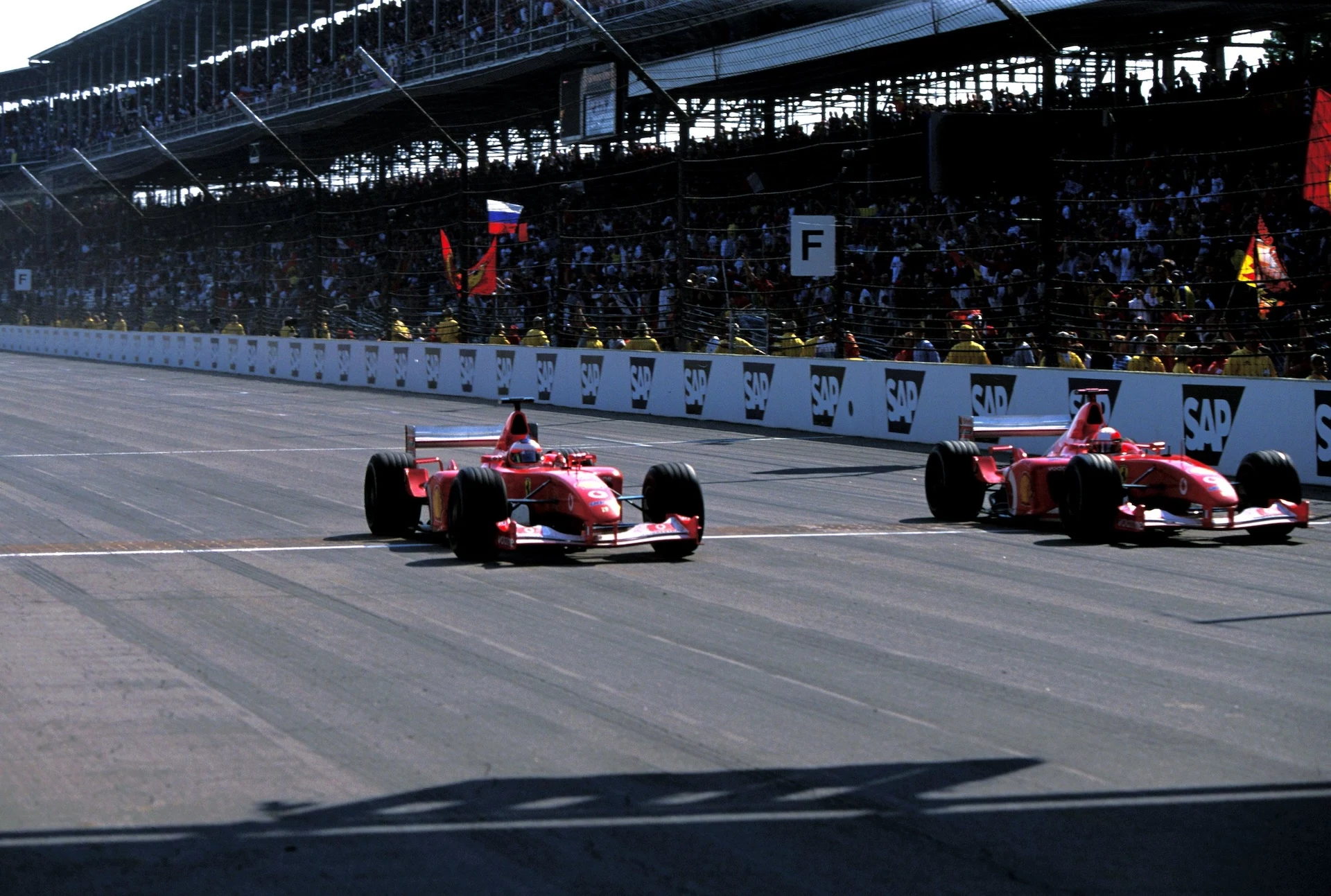
By the time Formula 1 arrived at the Brickyard in 2002, Michael Schumacher had long since wrapped up his fifth Drivers’ title and Ferrari another Constructors’ crown, and unsurprisingly the F2002s were again the class of the field.
Schumacher controlled the race, but slowed on the last lap to stage a side-by-side finish, and after brief uncertainty – while the drivers pointed to each other and tried to figure it out – it was judged that Rubens Barrichello had nosed ahead by 0.011s.
There was speculation that it was payback for the saga in Austria earlier in the year, though Schumacher only went as far as claiming he was trying to engineer a dead heat.
1. 1971 Italian Grand Prix – 0.01s
Monza’s 1971 race was the last before two chicanes were introduced to the track in a bid to reduce speeds slightly, and its old layout certainly signed off with a humdinger.
A few of the pre-race favourites retired in the early stages, and subsequently the race developed into a slipstream battle involving several drivers.
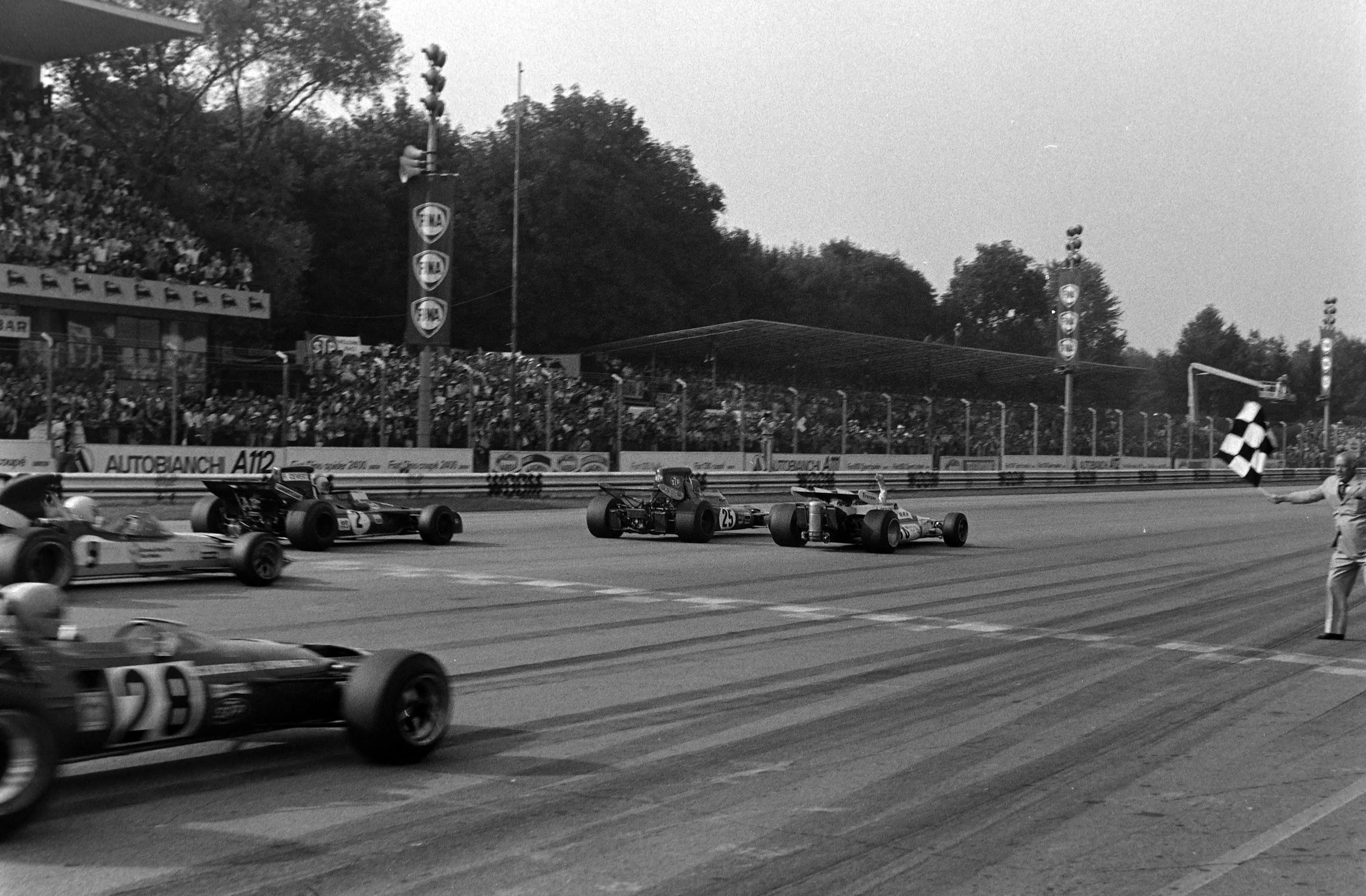
Five cars ran line astern across the final lap, scrapping fiercely as they raced to Parabolica, and it was Peter Gethin who emerged in front.
Ronnie Peterson challenged Gethin to the line and they crossed side-by-side, but by a hair’s breadth it was Gethin who triumphed. Francois Cevert was third at 0.09s, Mike Hailwood fourth at 0.18s, and Howard Ganley a comparatively whopping 0.61s behind in fifth.
Next Up
Related Articles
 BettingThe 5 drivers most likely to win the Bahrain GP
 UnlockedHow Hadjar cleverly handled his comeback to claim a podium in Baku
 'Less pressure on me than Kimi' – Russell on title fight
 'I'm one of the best out there and I'm not afraid to say it' – Ocon
 The 2026 Qualifying and race head-to-heads so far
 Why a return to Sepang is a 'golden ticket' for F1 drivers