Inside the F1 driver’s bubble: Mercedes’ comms chief Bradley Lord explains how he helps drivers work with the media
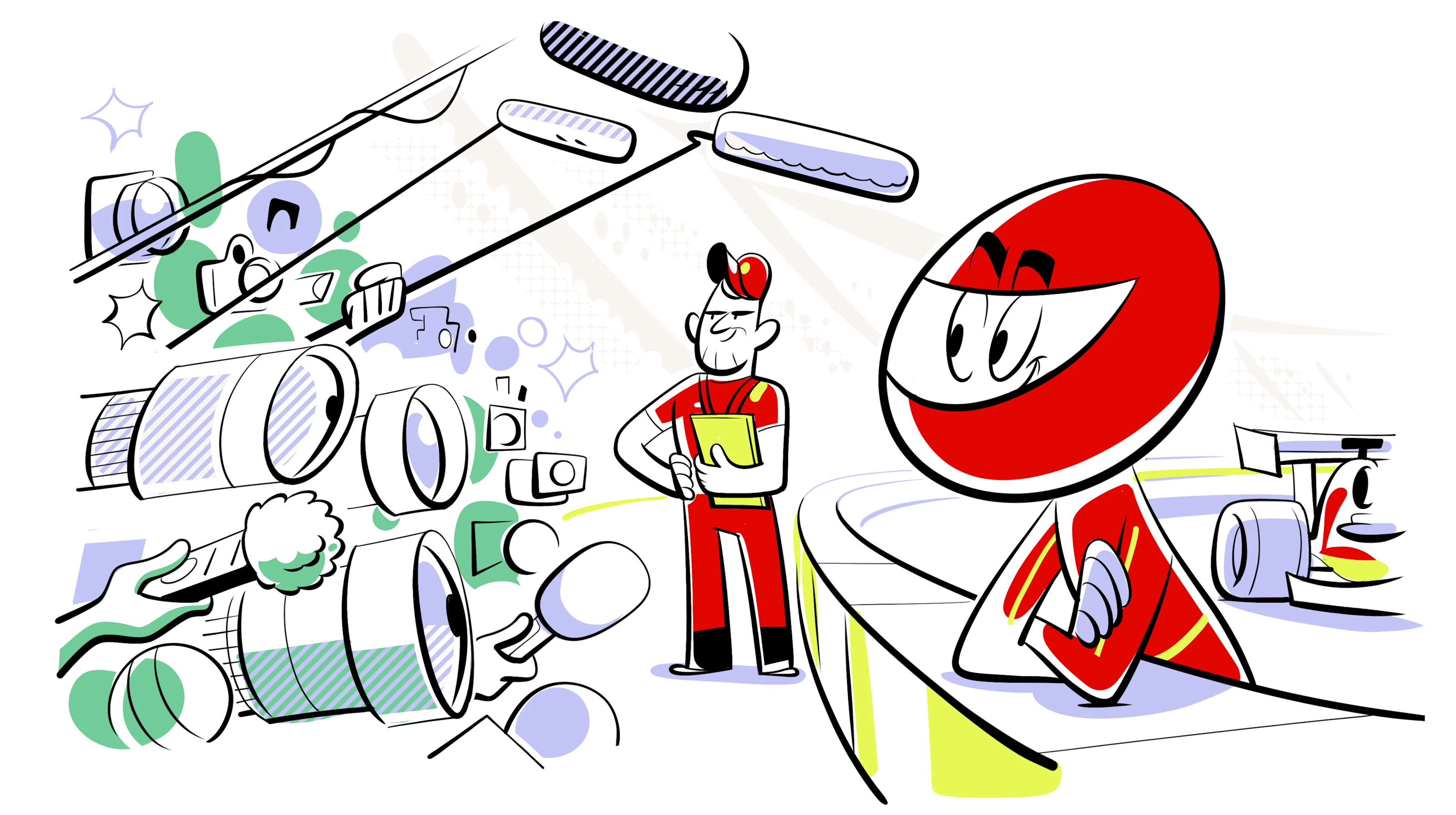
F1.com is delving into those bubbles to gain a greater understanding of the lives of those who work closely with the stars of F1. This week Bradley Lord, Mercedes’ Team Representative and Chief Communications Officer, explains how his team guides its drivers in dealing with the media, managing relationships, and co-ordinating activities through a race weekend.
.webp)
Modern Formula 1 teams are huge companies with hundreds of employees all working hard to try to be the best in the sport. But within these vast organisations there are the teams within a team – the small cadre of people centred around helping each driver perform at their maximum.
Formula 1.com is delving into those bubbles to gain a greater understanding of the lives of those who work closely with the stars of F1. This week Bradley Lord, Mercedes’ Team Representative and Chief Communications Officer, explains how his team guides its drivers in dealing with the media, managing relationships, and co-ordinating activities through a race weekend.
Part of the obligation for Formula 1 drivers throughout the course of a Grand Prix season is to regularly converse with the championship’s media corps. This group encompasses the print press, internet journalists, digital and social media, and broadcast media – and drivers have to deal with a torrent of press requests across the course of a campaign.
Acting as a go-between for drivers are the teams’ communications officers, who assist with managing a driver’s calendar, dealing with requests and interviews, and accompanying drivers to the media sessions – they are the people you will regularly see standing next to a driver during on-screen interviews.
Grand Prix weekends typically last for four days, with three days of on-track activity preceded by a day of media activities on the Thursday.
“A media schedule on a race weekend is built firstly around the core points of the regulations,” Lord explains.

“There are certain paragraphs in the sporting regulations that outline the minimum availability – so that’s after practice, after Qualifying, and after the race, and also includes clauses that says drivers must be, if requested to do so, be available at reasonable times to talk to the media, so that’s useful, as it embeds access for media.
“Generally the way teams will structure that is to really front-load the weekend, so most media activities, including one-to-ones or more in-depth conversations, will take place on a Thursday.
“There’s then a window, usually after Qualifying, to do more on a Saturday, then post-race on a Sunday everyone’s keen to debrief and get home.”
Managing a driver’s schedule is important to ensure that they are never distracted from their main objectives at each race weekend.

“In the teams I’ve worked with, you really try and leave the drivers in as much peace as possible through the performance parts of the weekend,” Lord says.
“On Saturday morning there’s the fan forum, but between practice and Qualifying that’s complete time dedicated to being with the engineers, preparation, recuperation, relaxation, ahead of Qualifying, because we don’t want any distractions.
“We try and build the schedule, be it sponsor appearances, Paddock Club, meet-and greets, in a way that doesn’t cost the drivers any performance. We can’t make them faster, but if we organise it badly, we can make it slower.”
Teams are conscious of interest surging and waning at various intervals throughout the course of a season, and plan accordingly where possible.

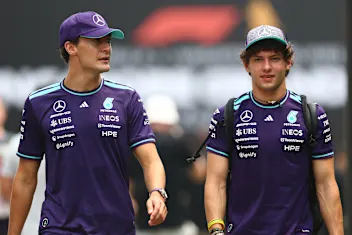
“We generally agree a bit of an approach at the start of the year: where you want to focus, what the priorities are,” Lord says. “A driver’s national media are important – so that’s Italian media for Kimi [Antonelli], the British media for George [Russell], so you’ll probably offer a bit more access there, just so they’re able to look after their core journalists, and generally the media group also accompany them through the racing pyramid and have been there on the road to success.
“It’s important to respect existing relationships too, whether that’s working on the team side, or the driver’s side.”
The Formula 1 news cycle can sometimes be relentless and part of the role of a communications officer is to be across all subjects to ensure that drivers aren’t surprised by a topic or a left-field query, while also separating the wheat from the chaff.
“The way we work with drivers is we brief them, and we have a traffic lights system where green is a topic to say what you think – and we try and have as many greens as possible – and then if we want to present a particular point it might be a red or an amber, but it’s very rare there’s a conflict.

“Our job is to protect the drivers, and if something has gone wrong the team will always stand in front of the driver and not leave the driver exposed, that’s part of the team work of the sport. Our main goal with Kimi and George, and Lewis beforehand, is to be yourselves and be authentic, and don’t tell lies, because that trips you up and you get found out.
“A lot of the briefing process is giving them context and awareness. Very few of the drivers spend time digesting and consuming media, so our job is to give them a scan of what’s going on and what might be coming up – ‘just so you know you might be asked about this, we’d suggest this is a good way to navigate that, don’t get drawn into this particular situation or discussion’.”
Lord has seen the evolution of Formula 1 across the past few decades and has seen how that has influenced and affected the commitments drivers now have with the media.
“It remains as important as ever, particularly as Formula 1 is growing, to have an independent media corps, who hold us to account,” Lord stresses. “It’s not just content that the teams or series produces – independent voices and independent media are important, as it upholds the integrity and credibility of the sport.

“I came into a sport where we were printing, photocopying and handing out press releases in the media centre, which feels like the Stone Age!
“Now you’re seeing independent media, and individual media, as well as the more traditional powerhouses. There’s more broadcast demand now, there’s Netflix now and other projects that are similar to that. It’s our job to deliver to as many of those, without creating the drag factors on the drivers. Those are the main changes.
“We’re also seeing the drivers being asked a much wider variety of questions. It used to be very narrow, now it’s what are their interests, their backgrounds, lots of weird and wonderful things, as that makes it fun – for the drivers instead of being asked the same old questions, it’s nice to have some freshness of approach and freshness of perspective.”

And in his evolved role as Team Representative it has meant crossing the divide for Lord, who now holds media sessions and undertakes TV duties when Team Principal Toto Wolff is not present.
“It’s much more difficult than most PR people will give credit for! You stand in front of the camera or on the other end of the microphone and have to deliver cogent and coherent answers to what can be sometimes tricky questions.
“It’s quite easy for us to underestimate the stress it can cause and the challenge it can cause for the people we work with too – so it’s a useful insight.”
.webp)
Next Up
.webp)

.webp)
.webp)